
Sciatica Symptoms: Causes, Diagnosis & Treatment
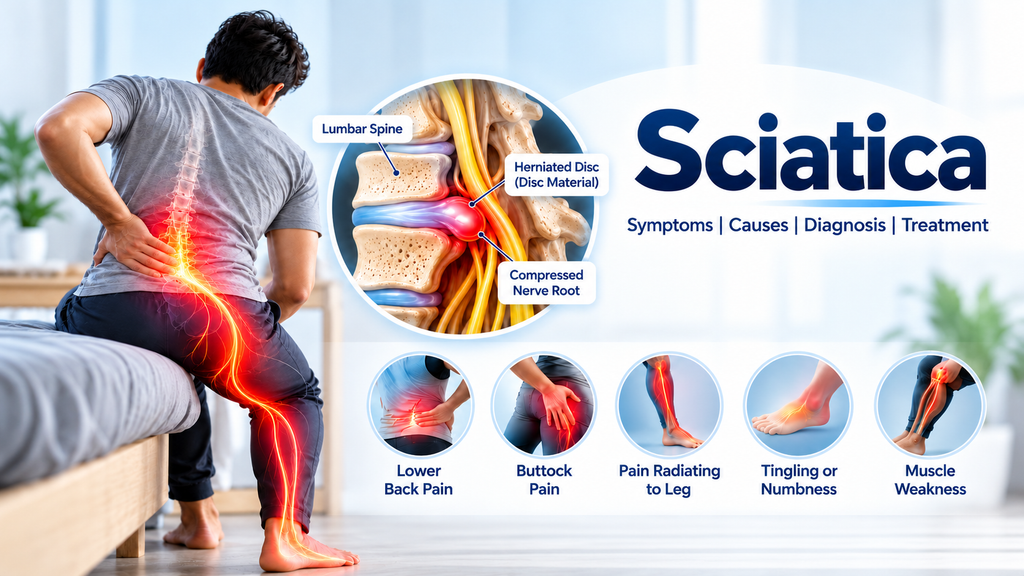
Sciatica is a condition that causes pain along the path of the sciatic nerve, which runs from the lower back through the hips and buttocks and down each leg. It usually occurs when a nerve root in the lower spine becomes irritated or compressed.
Sciatica symptoms can range from mild discomfort to sharp, burning pain that travels down the leg. Some people also experience tingling, numbness, or muscle weakness. Understanding the causes, recognizing warning signs, and receiving an appropriate medical evaluation can help determine the right treatment.
What Is Sciatica?
Sciatica refers to pain caused by irritation or compression of the nerve roots that contribute to the sciatic nerve. It commonly affects one side of the body, although symptoms can vary.
Sciatica is not a disease by itself. It is a symptom of an underlying problem involving the lower back or nearby nerve structures.
Common causes include a herniated lumbar disc, age-related changes in the spine, and narrowing of the spinal canal. The treatment depends on the underlying cause, the severity of symptoms, and whether nerve function is affected.
Sciatica Symptoms: Common Signs to Recognize
Sciatica symptoms may develop gradually or appear suddenly. Common symptoms include:
1. Pain That Travels Down the Leg
Pain may begin in the lower back or buttock and travel down the back or side of the thigh and into the calf or foot. The pain may feel sharp, shooting, burning, or electric.
2. Lower Back and Buttock Pain
Some people experience lower back discomfort along with pain in the buttock. Others have leg pain that is more noticeable than their back pain.
3. Tingling or a Pins-and-Needles Sensation
Irritation of a nerve root may cause tingling or a pins-and-needles sensation in the leg or foot.
4. Numbness
A person may experience reduced sensation in parts of the leg or foot. The location depends on which nerve root is affected.
5. Muscle Weakness
Sciatica can sometimes cause weakness in the leg or foot. Difficulty lifting the front of the foot, standing on the toes, or walking normally needs prompt medical assessment.
6. Pain That Worsens With Certain Movements
Pain may worsen with prolonged sitting, coughing, sneezing, bending, or certain movements. However, symptoms differ from person to person, and not everyone experiences the same triggers.
What Causes Sciatica?
Several conditions can irritate or compress the nerve roots associated with the sciatic nerve.
1. Lumbar Disc Herniation
A herniated disc occurs when material from an intervertebral disc protrudes and may press against a nearby nerve root. This is one of the common causes of sciatica.
Symptoms may include lower back pain, shooting leg pain, tingling, numbness, or weakness.
2. Spinal Stenosis
Spinal stenosis refers to narrowing of the spaces within the spine. When this narrowing compresses nerve structures in the lower back, it may cause leg pain, numbness, or weakness. Symptoms may become more noticeable while standing or walking.
3. Degenerative Changes in the Spine
Age-related changes in discs and joints can contribute to narrowing around the nerve roots. These changes do not always cause symptoms, but they may contribute to sciatica in some people.
4. Spondylolisthesis
Spondylolisthesis occurs when one vertebra slips relative to another. In some cases, this can narrow the space available for nerves and contribute to leg pain or other neurological symptoms.
5. Other Causes
Less commonly, sciatica-like symptoms may be associated with other conditions affecting the lower back, pelvis, or surrounding structures. A medical examination helps determine whether the pain is actually caused by nerve root irritation.
Who Is at Risk of Developing Sciatica?
Certain factors may increase the likelihood of developing sciatica, including:
- Increasing age and age-related spinal changes
- Prolonged sitting and limited physical activity
- Repeated heavy lifting or poor lifting technique
- Work involving frequent bending or twisting
- Excess body weight
- Previous lower back problems
These factors do not mean a person will definitely develop sciatica. Symptoms can occur even in people without obvious risk factors.
How Is Sciatica Diagnosed?
Diagnosis usually begins with a review of symptoms, medical history, and physical examination.
A doctor may assess walking, leg strength, sensation, reflexes, and movements that reproduce the pain. The examination can help identify whether a nerve root may be involved.
MRI of the Lumbar Spine
An MRI may be recommended when symptoms are severe, persistent, associated with neurological changes, or when imaging would help guide treatment. It can show discs, nerve roots, and other soft tissues.
Not every person with sciatica needs an immediate MRI. The decision depends on the symptoms, examination findings, and whether serious underlying conditions are suspected.
Other Imaging Tests
X-rays may help assess certain bone or alignment problems, but they do not directly show nerve compression in the same detail as an MRI.
In selected cases, additional tests may be recommended to investigate other possible causes of leg pain or weakness.
Sciatica Treatment Options
Many cases of sciatica improve over time with appropriate conservative care. Treatment depends on the cause, symptom severity, and whether there is progressive nerve dysfunction.
1. Activity Modification
Briefly adjusting activities that aggravate pain may help. However, prolonged bed rest is generally discouraged. Gentle movement and a gradual return to normal activities are often preferable when medically appropriate.
2. Physiotherapy and Guided Exercises
A physiotherapist may recommend individualized exercises to improve mobility, strength, and movement control. The right program depends on the diagnosis and symptoms.
Stop exercises that significantly worsen pain or cause new numbness or weakness, and seek professional advice.
3. Medication
A clinician may consider medication to manage pain or related symptoms. The choice depends on the patient’s medical history, other medicines, and possible side effects.
Do not start prescription medication or use painkillers for prolonged periods without appropriate medical guidance.
4. Injection-Based Treatment
In selected cases, a specialist may consider an injection around an affected nerve root to help manage symptoms. The potential benefits, risks, and expected duration of relief should be discussed before treatment.
Injections are not necessary for everyone and do not correct every underlying cause of sciatica.
5. Surgical Treatment
Surgery may be considered when imaging and examination findings identify a correctable cause of nerve compression and symptoms remain disabling despite appropriate non-surgical treatment.
Surgery may also be needed urgently when serious neurological warning signs develop.
Depending on the cause, procedures may include a microdiscectomy to remove the portion of a disc compressing a nerve or another procedure designed to relieve pressure on affected nerve structures.
The decision to undergo surgery depends on the individual clinical situation. Not everyone with sciatica needs an operation.
When Should You See a Neurosurgeon for Sciatica?
A specialist assessment may be appropriate when:
- Leg pain persists or repeatedly returns despite appropriate treatment.
- Pain significantly affects walking, sleeping, work, or daily activities.
- Numbness or weakness is developing or worsening.
- Imaging shows a disc herniation or another structural problem that may explain the symptoms.
- A surgical treatment option needs to be evaluated.
The decision to consult a neurosurgeon depends on the symptoms, examination findings, and suspected cause. Many people with sciatica can be managed without surgery.
Warning Signs: When Is Sciatica an Emergency?
Seek emergency medical care immediately if you experience any of the following:
- New difficulty passing urine or inability to control urination
- Loss of bowel control
- New numbness around the groin, genitals, or inner thighs
- Severe or rapidly worsening weakness in one or both legs
- Severe symptoms affecting both legs, particularly when accompanied by changes in bladder, bowel, or saddle-area sensation
These symptoms may indicate serious nerve compression, including cauda equina syndrome, which requires urgent assessment.
Do not wait for symptoms to improve or rely on home treatment if these warning signs occur.
Can Sciatica Be Prevented?
Not every case can be prevented, but maintaining healthy movement habits may support lower back health.
Helpful measures include:
- Staying physically active within your ability.
- Building core and back strength with appropriate exercises.
- Using safe lifting techniques.
- Taking regular movement breaks during prolonged sitting.
- Maintaining a healthy body weight where appropriate.
- Seeking medical advice when persistent back or leg symptoms develop.
Prevention strategies should be adapted to individual health needs, especially for people with existing spinal conditions.
Frequently Asked Questions About Sciatica Symptoms
What are the first symptoms of sciatica?
Early symptoms may include pain in the buttock or lower back that travels down one leg. Tingling, numbness, or weakness may also occur, depending on the affected nerve root.
Can sciatica occur without lower back pain?
Yes. Some people experience pain mainly in the buttock or leg without significant lower back pain.
How long does sciatica last?
The duration varies according to the underlying cause and severity. Many cases improve over several weeks, but persistent symptoms or neurological changes need medical evaluation.
Does sciatica always require surgery?
No. Many people improve with non-surgical treatment. Surgery may be considered when symptoms remain disabling, a correctable cause of nerve compression is identified, or urgent neurological problems develop.
Is an MRI necessary for sciatica?
Not always. An MRI may be recommended when symptoms persist, neurological deficits are present, a serious condition is suspected, or imaging will influence treatment decisions.
Can a herniated disc cause sciatica?
Yes. A lumbar disc herniation can irritate or compress a nearby nerve root and cause pain that radiates down the leg. However, not every herniated disc causes symptoms.
Conclusion
Sciatica can cause lower back or buttock pain that travels down the leg, along with tingling, numbness, or muscle weakness. Common causes include lumbar disc herniation and other conditions that affect nerve roots in the lower spine.
An appropriate medical assessment helps identify the cause and determine whether conservative treatment, further investigations, or specialist care is needed. Seek emergency care immediately if bladder or bowel changes, saddle-area numbness, or rapidly worsening weakness develops.
Medical disclaimer: This article is intended for general educational purposes and does not replace professional medical advice, diagnosis, or treatment.