Trigeminal Neuralgia: Symptoms, Causes & Treatment
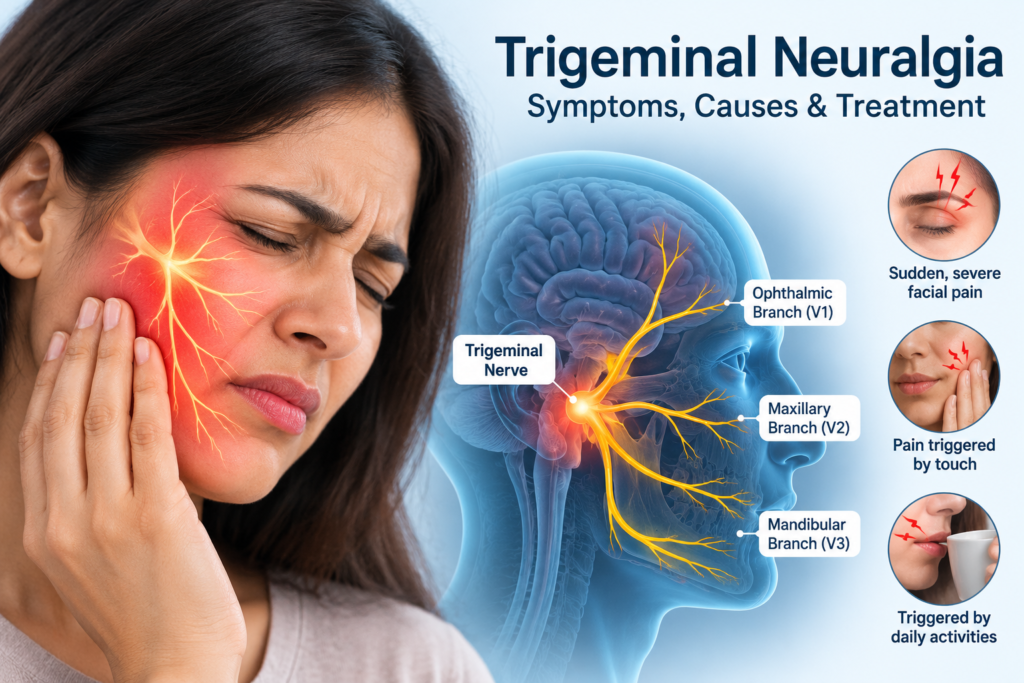
Trigeminal neuralgia is a condition that can cause sudden, severe facial pain. The pain is often described as an electric shock or sharp stabbing sensation. It may occur while eating, speaking, brushing the teeth or lightly touching the face.
The condition affects the trigeminal nerve, which carries sensation from the face to the brain. Symptoms and their impact vary between individuals. Understanding possible causes, diagnostic tests and treatment options can help patients discuss appropriate care with a qualified medical professional.
Not all facial pain is trigeminal neuralgia. Dental conditions and other medical problems can cause similar symptoms, so an accurate assessment is important.
What Is Trigeminal Neuralgia?
The trigeminal nerve, also known as cranial nerve V, carries sensory information from the face, teeth and mouth. It has three main branches:
- Ophthalmic branch: Supplies sensation to the forehead and area around the eyes.
- Maxillary branch: Supplies sensation to the cheeks, upper lip and upper teeth.
- Mandibular branch: Supplies sensation to the jaw, lower lip and lower teeth.
Trigeminal neuralgia can affect one or more of these branches, most commonly on one side of the face.
What Are the Symptoms of Trigeminal Neuralgia?
Common symptoms include:
- Sudden, intense, electric-shock-like facial pain.
- Sharp or stabbing pain affecting one side of the face.
- Pain around the cheek, jaw, teeth, gums or lips.
- Brief attacks that usually last a few seconds to around two minutes.
- Repeated attacks that may occur several times a day.
- Pain triggered by ordinary activities such as chewing or washing the face.
Some people experience aching or burning discomfort between attacks. The pattern and severity can vary over time.
Common Triggers
Pain attacks may be triggered by:
- Brushing the teeth or washing the face.
- Eating, chewing or drinking.
- Speaking, smiling or shaving.
- Touching the cheek or jaw.
- Exposure to a light breeze or cold air.
Keeping a record of symptoms, duration and possible triggers may help during medical evaluation.
What Causes Trigeminal Neuralgia?
Possible causes include:
Blood vessel compression: A blood vessel may press against the trigeminal nerve near its connection to the brain, affecting normal nerve signalling.
Multiple sclerosis: Damage to the protective covering of nerve fibres can affect trigeminal nerve pathways.
Tumours or other structural conditions: In some cases, a tumour or another abnormality may affect the nerve.
Unknown cause: Investigations do not always identify a clear underlying cause.
The diagnosis cannot be made from pain symptoms alone. Facial pain may also arise from dental disease, sinus conditions, migraine and other neurological problems.
How Is Trigeminal Neuralgia Diagnosed?
Assessment usually includes a review of symptoms, medical history and neurological examination. The doctor may ask where the pain occurs, how long attacks last and what triggers them.
A brain MRI may be recommended to investigate possible nerve compression, multiple sclerosis, tumours or other structural causes.
MRI findings must be interpreted alongside symptoms and examination results. Imaging alone does not establish the diagnosis in every case.
What Are the Treatment Options?
Treatment depends on the suspected cause, pain severity, response to medication, general health and individual preferences.
1. Medicines
Medicines are often considered first. Carbamazepine is a commonly used first-line medicine, and oxcarbazepine may be an alternative. Other medicines may be considered in selected cases.
Possible side effects include dizziness, drowsiness and nausea. These medicines require medical supervision because of potential side effects and interactions. Do not change or stop a prescribed medicine without consulting the prescribing clinician.
2. Microvascular Decompression
Microvascular decompression is an operation that separates a blood vessel from the trigeminal nerve when vascular compression is believed to cause the pain.
It may be considered in selected patients when medicines are ineffective or poorly tolerated and the clinical findings support this approach. It involves open surgery, and its risks and expected benefits require individual assessment. Microvascular decompression gives almost instant and potential pain relief to patients.
3. Stereotactic Radiosurgery
Stereotactic radiosurgery uses focused radiation directed at the trigeminal nerve root. It may be considered for selected patients who are unsuitable for open surgery or prefer another approach after discussing the options.
Pain relief may take weeks or months, and symptoms can recur.
4. Percutaneous Procedures
Procedures such as radiofrequency treatment, balloon compression and glycerol rhizolysis target pain-transmitting nerve fibres. They may provide relief for selected patients, but the duration of benefit varies and side effects are possible.
5. Nerve Blocks
A nerve block may be considered in selected circumstances for temporary pain relief. It is not a long-term solution for every patient.
The choice of treatment should be based on the diagnosis, clinical findings and a discussion of the benefits, risks and alternatives.
When Should You Seek Medical Help?
Arrange a medical assessment if facial pain keeps returning, affects eating or daily activities, or does not improve with prescribed treatment.
Seek emergency care immediately if facial pain occurs with sudden facial drooping, weakness or numbness in an arm or leg, difficulty speaking, sudden vision changes, breathing difficulty or collapse. These symptoms may indicate another serious condition and should not be assumed to be trigeminal neuralgia.
Frequently Asked Questions
Is trigeminal neuralgia permanent?
It can be a chronic condition, but its course varies. Some people experience periods of fewer symptoms, while others need ongoing treatment.
Can trigeminal neuralgia be treated without surgery?
Yes. Medication is often the initial treatment. Procedures may be considered when medicines do not provide adequate relief or cause significant side effects.
Is an MRI always necessary?
A doctor may recommend MRI to investigate possible underlying causes. The need for imaging depends on the clinical assessment.
Does surgery guarantee permanent relief?
No procedure guarantees permanent relief for every patient. Outcomes and the possibility of recurrence depend on individual circumstances and the treatment used.
Conclusion
Trigeminal neuralgia can cause severe facial pain that interferes with everyday activities. Recognising its characteristic symptoms and identifying possible underlying causes can help guide assessment and treatment.
Treatment may involve medication or a procedure, depending on the individual’s condition. Recurring or unexplained facial pain should be evaluated by a qualified medical professional.
Medical disclaimer: This article is for general educational purposes only. It does not replace professional medical advice, diagnosis or treatment. Medical claims and treatment information should be reviewed by a qualified clinician before publication.