
Spinal Cord Compression Symptoms: Causes, MRI & Treatment
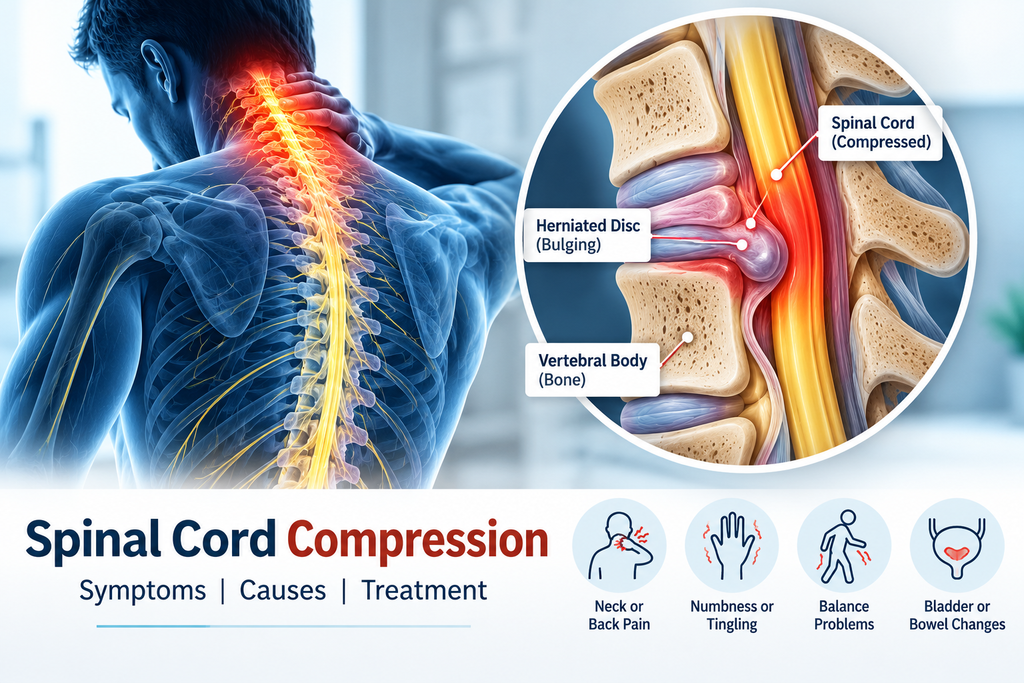
Spinal cord compression occurs when pressure on the spinal cord affects the signals travelling between the brain and the rest of the body. It may develop due to age-related spinal changes, a herniated disc, an injury, a tumour, or an infection.
Recognizing spinal cord compression symptoms early is important because the condition can affect movement, sensation, coordination, and bladder or bowel function. Symptoms vary depending on the location, cause, and severity of the compression.
Some people develop symptoms gradually, while others may experience a sudden change that requires emergency medical attention. Understanding the early warning signs, available diagnostic tests, and treatment options can help patients seek appropriate medical care.
In this guide, we explain spinal cord compression causes, symptoms, MRI diagnosis, treatment options, and when to consult a neurosurgeon.
What Is Spinal Cord Compression?
Spinal cord compression occurs when a structure inside or around the spinal canal places pressure on the spinal cord. The spinal canal is the passage within the vertebral column that protects the spinal cord.
A herniated disc, bone spur, thickened ligament, fracture, tumour, or infection may reduce the available space and compress the spinal cord.
The spinal cord carries signals involved in movement and sensation. When these signals are affected, a person may develop weakness, numbness, coordination problems, or difficulty walking.
Spinal cord compression can occur in different regions of the spine:
- Cervical spine: The neck region. Compression may affect hand coordination, arm strength, leg function, and balance.
- Thoracic spine: The middle-back region. Compression may affect the trunk and legs.
- Lower spinal canal: In adults, the spinal cord usually ends in the upper lumbar region. Compression lower down may affect the cauda equina, a bundle of nerve roots, rather than the spinal cord itself.
The location and severity of compression help determine the symptoms, investigations, and treatment required.
Spinal Cord Compression Symptoms: Early Warning Signs
The early signs of spinal cord compression can be subtle. Some people first notice changes in their hands, walking pattern, balance, or sensation rather than severe neck or back pain.
Symptoms may develop gradually or appear suddenly, depending on the underlying cause.
1. Numbness and Tingling
One of the possible spinal cord compression symptoms is numbness or tingling in the hands, arms, legs, or feet. Some people describe these sensations as pins and needles or reduced sensitivity when touching objects.
Persistent or worsening numbness should be evaluated, particularly when it occurs with weakness, hand clumsiness, or difficulty walking.
2. Hand Clumsiness and Reduced Coordination
Cervical spinal cord compression may affect fine motor skills. Everyday activities can become difficult when coordination changes.
You may notice difficulty with:
- Buttoning shirts or tying shoelaces.
- Writing or handling small objects.
- Using cutlery.
- Holding objects securely.
- Performing tasks that require precise finger movements.
Hand clumsiness accompanied by balance changes or limb weakness deserves medical assessment.
3. Difficulty Walking and Balance Problems
Spinal cord compression may affect coordination and walking ability. A person may experience unsteadiness, stiff legs, frequent stumbling, or difficulty walking on uneven surfaces.
New walking difficulties should not automatically be attributed to ageing. Sudden or rapidly worsening problems with walking require urgent medical evaluation.
4. Muscle Weakness
Pressure on the spinal cord may interfere with signals controlling muscle movement. Weakness can affect the hands, arms, legs, or feet, depending on the location of compression.
If weakness progresses or interferes with daily activities, seek prompt medical attention.
5. Neck Pain or Back Pain
Some patients experience persistent neck pain, back pain, stiffness, or pain spreading into an arm or leg. However, severe pain is not always present in people with spinal cord compression.
Pain alone cannot confirm the diagnosis. A doctor considers the symptoms, neurological examination, and imaging findings together.
6. Bladder or Bowel Changes
Changes in bladder or bowel function may indicate serious compression affecting neurological structures.
Warning signs include difficulty passing urine, inability to empty the bladder, sudden loss of bladder or bowel control, or numbness around the groin and buttocks.
These symptoms require immediate emergency medical assessment. Do not wait for a routine appointment.
What Causes Spinal Cord Compression?
Spinal cord compression causes include degenerative spinal changes, herniated discs, traumatic injuries, tumours, and infections. Identifying the underlying cause is important because treatment differs from one condition to another.
1. Degenerative Spinal Changes
As people age, spinal discs may lose height and flexibility. Bone spurs can develop, and the ligaments surrounding the spinal canal may thicken.
These changes can narrow the spinal canal and place pressure on the spinal cord.
When degenerative changes in the neck lead to spinal cord dysfunction, the condition may be called degenerative cervical myelopathy. Not everyone with spinal degeneration develops myelopathy.
2. Herniated or Bulging Disc
Spinal discs act as cushions between the vertebrae. A disc may bulge or herniate into the spinal canal, potentially compressing the spinal cord or nearby nerve roots.
Symptoms depend on the location and extent of the disc problem and the neurological structures affected.
3. Spinal Injury or Fracture
Road accidents, falls, and other traumatic injuries may fracture or displace vertebrae. Bone fragments, swelling, or bleeding can reduce the available space within the spinal canal.
Suspected serious spinal injuries require urgent medical assessment.
4. Spinal Tumours
Tumours may develop within the spinal canal or spread to the spine from another part of the body. Depending on their location, they may place pressure on the spinal cord.
People with a history of cancer who develop new or progressive back pain, weakness, sensory changes, or walking difficulty should seek prompt medical assessment.
5. Spinal Infection
An infection involving the spine or surrounding tissues may cause inflammation, bone damage, or a collection of infected material that compresses neurological structures.
Spinal pain accompanied by fever, chills, or new neurological symptoms needs urgent medical evaluation.
When Is Spinal Cord Compression an Emergency?
Spinal cord compression can sometimes progress rapidly. Early recognition of emergency warning signs is important because some causes need time-sensitive treatment.
Seek emergency medical care if you experience:
- New inability to urinate or difficulty emptying your bladder.
- Sudden loss of bladder or bowel control.
- New numbness around the groin, buttocks, or genital area.
- Rapidly worsening weakness in an arm or leg.
- Sudden difficulty standing or walking.
- Severe spinal pain after a significant injury, especially with numbness or weakness.
- New spinal pain or neurological symptoms alongside a history of cancer.
- Spinal pain with fever and new neurological symptoms.
These warning signs do not establish a diagnosis on their own. However, they can indicate a serious neurological condition that needs immediate assessment.
Do not try to manage these symptoms with home exercises, massage, or spinal manipulation instead of seeking medical care.
How Is Spinal Cord Compression Diagnosed?
Diagnosing spinal cord compression usually involves a review of symptoms, a neurological examination, and appropriate imaging tests.
1. Medical History and Neurological Examination
A doctor may ask when the symptoms started, whether they are worsening, and whether they affect walking, hand coordination, sensation, or bladder and bowel function.
The examination may assess:
- Muscle strength.
- Sensation in different parts of the body.
- Reflexes.
- Hand coordination.
- Walking pattern and balance.
- Other neurological signs related to the suspected spinal level.
These findings help determine which investigations are necessary and how urgently they should be performed.
2. Spinal Cord Compression MRI
MRI is commonly the preferred imaging test when spinal cord compression or myelopathy is suspected. It provides detailed images of the spinal cord, discs, ligaments, and surrounding soft tissues.
A spinal cord compression MRI may help doctors identify:
- The level and extent of spinal canal narrowing.
- A herniated disc or degenerative changes.
- Pressure on the spinal cord.
- Changes within the spinal cord.
- Possible tumours or infections.
MRI findings must be interpreted alongside symptoms and examination results. An abnormal scan does not automatically mean that surgery is necessary.
3. CT Scan and X-rays
A CT scan provides useful information about bone structure, fractures, and bone spurs. X-rays may help assess spinal alignment and certain structural changes.
However, X-rays do not show the spinal cord in the same detail as MRI. The choice of imaging depends on the suspected cause, urgency, medical history, and whether MRI can be performed.
Spinal Cord Compression Treatment Options
Spinal cord compression treatment depends on the underlying cause, severity of compression, neurological symptoms, and whether those symptoms are progressing.
Some patients may be suitable for monitoring and non-surgical management. Others may need surgical assessment to relieve pressure on the spinal cord.
1. Non-Surgical Treatment
In selected cases, particularly when symptoms are mild and there is no progressive neurological deterioration, a specialist may recommend an individualized non-surgical treatment plan.
Depending on the condition, this may include:
- Medication to manage pain or other symptoms.
- Activity modification based on medical advice.
- Supervised rehabilitation when considered safe.
- Follow-up examinations to monitor neurological function.
These approaches do not necessarily remove the structural cause of compression. Patients may need further assessment if symptoms change or worsen.
Important: Do not start forceful neck or back exercises, spinal manipulation, or an exercise programme for suspected spinal cord compression without appropriate medical advice.
2. Spinal Cord Compression Surgery
Spinal cord compression surgery may be considered when there is significant spinal cord dysfunction, progressive neurological deterioration, or another condition that requires surgical treatment.
The purpose of surgery is to relieve pressure on the spinal cord and, when necessary, stabilize the spine. The recommended procedure depends on the location of compression, spinal alignment, underlying cause, and the patient’s overall health.
Common procedures include:
Anterior Cervical Discectomy and Fusion (ACDF)
This procedure approaches the cervical spine from the front of the neck. A damaged disc and, when necessary, compressive bone are removed to relieve pressure. The affected level may then be stabilized through fusion.
Laminectomy
A laminectomy removes part or all of the bony arch at the back of a vertebra to create more space in the spinal canal. Spinal stabilization may also be needed in selected cases.
Laminoplasty
Laminoplasty is used in selected cases of cervical spinal canal narrowing. It reshapes or repositions part of the vertebral arch to increase space while preserving more motion than some fusion procedures.
Spinal Stabilization or Fusion
When the spine is unstable, screws, rods, bone grafts, or other implants may be used to stabilize the affected spinal levels.
No single procedure is suitable for every patient. A specialist should explain the potential benefits, risks, limitations, and alternatives based on the individual diagnosis.
3. Treatment for Tumour- or Infection-Related Compression
When spinal cord compression results from a tumour, infection, fracture, or another urgent condition, treatment must address the underlying cause as well as the pressure on neurological structures.
Depending on the diagnosis, management may involve surgery, medication, cancer-directed treatment, or other specialist care. The appropriate treatment and timing depend on the specific condition.
Can Spinal Cord Compression Cause Permanent Damage?
Spinal cord compression can sometimes cause lasting neurological problems, particularly when significant compression or spinal cord dysfunction remains untreated.
Possible complications include:
- Persistent muscle weakness.
- Changes in sensation.
- Difficulty walking or maintaining balance.
- Reduced coordination.
- Bladder or bowel dysfunction.
Outcomes vary depending on the cause, severity and duration of compression, existing neurological changes, and response to treatment.
Timely medical assessment can help identify patients who need urgent treatment and those who may be suitable for careful monitoring. Treatment may prevent further deterioration, but complete recovery cannot be guaranteed.
When Should You Consult a Neurosurgeon?
A medical assessment is important if you have persistent or worsening neck or back symptoms accompanied by numbness, weakness, hand clumsiness, walking difficulties, or balance problems.
A neurosurgical evaluation may be appropriate when examination or imaging suggests spinal cord compression, when neurological symptoms are progressing, or when surgery needs to be considered.
During an assessment, the specialist may:
- Review your symptoms and medical history.
- Examine muscle strength, sensation, reflexes, and coordination.
- Review relevant MRI or CT images.
- Explain whether monitoring or further investigations are appropriate.
- Discuss surgical and non-surgical treatment options when relevant.
If you are searching for the best neurosurgeon in Hyderabad for a spinal cord compression concern, consider a qualified specialist whose expertise matches your condition. Ask about the diagnosis, available treatment options, potential risks, and whether a second opinion would be helpful.
This blog’s commercial-intent phrase is included naturally; the main purpose of the article remains explaining spinal cord compression symptoms and treatment. For emergency warning signs, seek emergency care rather than waiting for a scheduled consultation.
Frequently Asked Questions About Spinal Cord Compression
1. What are the early symptoms of spinal cord compression?
Early symptoms may include numbness, tingling, hand clumsiness, muscle weakness, stiff legs, balance problems, or difficulty walking. The symptoms depend on the location and severity of compression.
2. What causes spinal cord compression?
Common causes include degenerative spinal changes, herniated discs, bone spurs, thickened ligaments, spinal injuries, tumours, and infections. The underlying cause determines the appropriate treatment.
3. Can spinal cord compression be treated without surgery?
Some patients may be managed with monitoring and non-surgical treatment. However, progressive neurological symptoms or significant spinal cord dysfunction may require surgical assessment.
4. Does MRI detect spinal cord compression?
MRI is commonly the preferred imaging test because it provides detailed images of the spinal cord and surrounding soft tissues. The findings must be interpreted alongside symptoms and the neurological examination.
5. Is spinal cord compression the same as a pinched nerve?
No. A pinched nerve commonly refers to compression or irritation of a nerve root. Spinal cord compression affects the spinal cord itself and may cause coordination problems, walking difficulties, or symptoms involving multiple limbs.
6. Can spinal cord compression affect walking?
Yes. Depending on the location and severity, it can affect muscle strength, coordination, balance, or walking ability. New or worsening walking difficulties require prompt medical assessment.
7. Is spinal cord compression surgery always necessary?
No. Treatment depends on the cause, severity, neurological examination, imaging, and progression of symptoms. Some patients may be monitored, while others need surgical treatment.
8. Can exercises cure spinal cord compression?
Exercises cannot remove a bone spur or correct every structural cause of compression. Supervised rehabilitation may help selected patients, but suspected spinal cord compression should be assessed before starting exercises or spinal manipulation.
9. Can spinal cord compression symptoms improve?
Symptoms may improve in some patients, but outcomes vary. The cause, severity, duration, and treatment all influence recovery. Some neurological changes may persist.
10. When should I see a best neurosurgeon in Hyderabad?
Consider a specialist assessment if you have persistent or worsening symptoms such as weakness, hand clumsiness, numbness, or balance problems. New bladder or bowel dysfunction, numbness around the groin, rapidly worsening weakness, or sudden difficulty walking requires emergency assessment.
Conclusion
Spinal cord compression is a condition in which pressure on the spinal cord may affect movement, sensation, coordination, and other neurological functions. Common causes include degenerative spinal changes, herniated discs, injuries, tumours, and infections.
Recognizing spinal cord compression symptoms—including numbness, hand clumsiness, muscle weakness, balance problems, and walking difficulties—can help people seek appropriate medical care. New bladder or bowel problems, numbness around the groin, rapidly worsening weakness, or sudden difficulty walking require emergency assessment.
Diagnosis and treatment depend on the cause and severity of compression. A timely clinical evaluation helps determine whether monitoring, further investigation, or treatment is needed.
Medical Disclaimer
This article is for educational and informational purposes only. It does not replace professional medical advice, diagnosis, or treatment. Consult a qualified healthcare professional about medical symptoms or concerns. Never delay emergency care because of information read online.