
Cervical Myelopathy: Symptoms, Causes & Treatment
Introduction
Difficulty buttoning a shirt, frequently dropping objects, numbness in the hands, or feeling unsteady while walking may seem like minor problems. However, persistent or worsening symptoms may indicate cervical myelopathy, a condition involving compression of the spinal cord in the neck.
The spinal cord carries signals between the brain and the rest of the body. Pressure on it can affect hand coordination, muscle strength, balance and walking. Recognising symptoms and seeking appropriate medical assessment can help guide treatment decisions.
What Is Cervical Myelopathy?
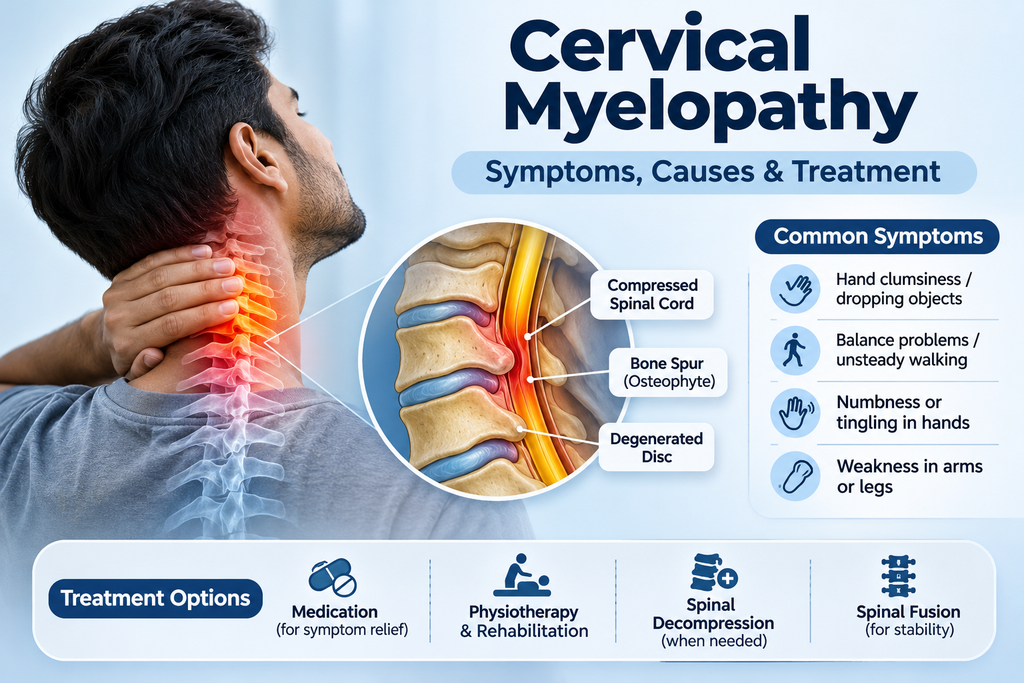
Cervical myelopathy occurs when the spinal cord is compressed in the cervical spine, which is the neck region. This may happen when changes in the bones, discs or ligaments reduce the space available for the spinal cord.
The condition can affect the arms, hands and legs, even when neck pain is mild or absent.
Cervical Myelopathy vs Cervical Radiculopathy
- Cervical myelopathy: Involves spinal cord dysfunction and may cause hand clumsiness, balance problems and difficulty walking.
- Cervical radiculopathy: Involves irritation or compression of a nerve root and may cause pain, tingling or numbness radiating into one arm.
- Ordinary neck pain: May arise from muscles, joints or other structures without spinal cord compression.
Because symptoms can overlap, clinical assessment is important to identify the underlying cause.
What Causes Cervical Myelopathy?
Possible causes include:
- Cervical spondylosis: Age-related changes may lead to disc degeneration and bone spurs.
- Herniated discs: Disc material may protrude into the spinal canal and press against the spinal cord.
- Thickened ligaments: Changes in supporting ligaments may narrow the spinal canal.
- Congenital spinal canal narrowing: A naturally narrow spinal canal may increase susceptibility to compression.
- Spinal injury or instability: Trauma or structural changes may contribute to spinal cord compression.
The cause and degree of compression influence symptoms and treatment options.
Common Cervical Myelopathy Symptoms
Symptoms can develop gradually and vary between individuals.
Early Warning Signs
- Difficulty buttoning clothes, writing or handling small objects.
- Frequently dropping objects or reduced grip control.
- Numbness or tingling in the hands and fingers.
- Weakness in the arms or hands.
- Neck pain or stiffness.
- Changes in walking or balance.
More Advanced Symptoms
- Increasing weakness in the arms or legs.
- Stiffness or heaviness in the legs.
- Frequent stumbling or falls.
- Significant loss of hand coordination.
- Changes in bladder or bowel function in serious cases.
Not everyone experiences neck pain. New difficulties with hand coordination or balance should not automatically be attributed to ageing.
How Is Cervical Myelopathy Diagnosed?
Diagnosis typically involves a medical history, neurological examination and appropriate imaging.
Neurological Examination
A doctor may assess muscle strength, sensation, reflexes, hand coordination and walking balance.
MRI Scan
MRI can show the spinal cord, discs, ligaments and areas of narrowing. It helps identify the location and extent of compression.
Other Imaging Tests
CT scans can provide additional information about bone changes, while X-rays may help assess spinal alignment and stability.
Imaging findings need to be interpreted alongside symptoms and examination results. A scan alone does not determine whether surgery is necessary.
Cervical Myelopathy Treatment Options
Treatment depends on symptom severity, the degree of spinal cord compression and whether neurological function is worsening.
Non-Surgical Management
For selected people with mild, stable symptoms, a specialist may recommend monitoring and symptom management. Depending on the individual situation, this may include:
- Doctor-recommended medication for associated pain.
- Carefully selected physiotherapy or rehabilitation.
- Activity modification to reduce the risk of neck injury.
- Regular follow-up to monitor neurological changes.
These measures do not remove bone spurs or reverse established spinal canal narrowing. Suspected spinal cord compression requires appropriate specialist assessment.
When Is Surgery Considered?
Surgery may be considered when cervical myelopathy is moderate or severe, symptoms progressively worsen, or spinal cord compression significantly affects daily activities.
The main aim is to relieve pressure on the spinal cord and help prevent further neurological deterioration. Some symptoms may improve after treatment, but the degree of recovery varies.
Common Surgical Approaches
Depending on the individual diagnosis, procedures may include:
- Anterior cervical discectomy and fusion (ACDF): Removes problematic disc material through an approach at the front of the neck and may include fusion.
- Laminectomy: Removes part of the bone at the back of a vertebra to create more space.
- Laminoplasty: Reshapes or repositions part of the vertebral bone to enlarge the spinal canal.
- Spinal fusion: May be used with decompression when additional stability is required.
Not every patient needs the same procedure. A treating surgeon should explain the expected benefits, potential risks and alternatives.
Recovery After Cervical Myelopathy Treatment
Recovery depends on the severity and duration of spinal cord compression, the treatment performed and the person’s general health.
After surgery, care may include wound management, follow-up appointments and rehabilitation. Physiotherapy or occupational therapy may help with mobility, balance and hand function when appropriate.
Some symptoms may improve gradually, while longstanding spinal cord damage can limit recovery. Complete restoration of function cannot be guaranteed.
When Should You Seek Emergency Medical Care?
Seek urgent medical attention if you experience:
- Rapidly worsening weakness in the arms or legs.
- Sudden difficulty standing or walking.
- New loss of bladder or bowel control, or an inability to pass urine.
- Rapidly worsening numbness or other neurological symptoms.
- Significant neurological changes after a neck injury.
These symptoms may indicate serious spinal cord dysfunction and should not wait for a routine appointment.
Frequently Asked Questions
1. What are the first signs of cervical myelopathy?
Early signs may include hand clumsiness, difficulty handling small objects, numbness or tingling in the hands, and changes in balance or walking.
2. Can cervical myelopathy cause leg symptoms?
Yes. Compression of the spinal cord in the neck can affect signals travelling to the legs, causing stiffness, weakness or difficulty walking.
3. Is cervical myelopathy the same as cervical spondylosis?
No. Cervical spondylosis refers to age-related changes in the neck. Cervical myelopathy occurs when spinal cord dysfunction develops due to compression.
4. Can cervical myelopathy be treated without surgery?
Selected people with mild, stable symptoms may be monitored under specialist supervision. Moderate, severe or progressive cases may require surgical evaluation.
5. Can cervical myelopathy cause permanent damage?
Persistent spinal cord compression can cause lasting neurological problems. The extent of damage and potential recovery vary between individuals.
6. Which scan is used to diagnose cervical myelopathy?
MRI is particularly useful for examining the spinal cord and identifying compression. CT scans or X-rays may provide additional information when needed.
7. How long does recovery take after surgery?
Recovery varies according to the procedure, severity of compression and individual health. Rehabilitation may continue for weeks or months, and improvement differs between patients.
Conclusion
Cervical myelopathy involves spinal cord compression in the neck and can affect hand coordination, strength, balance and walking. Appropriate assessment can help identify the cause and guide treatment decisions.
Depending on the severity, management may involve monitoring, symptom management or surgery. Progressive neurological symptoms require prompt medical assessment.
Medical Disclaimer: This article is for educational purposes only and does not replace professional medical advice, diagnosis or treatment. Treatment decisions should be made with a qualified healthcare professional after individual assessment. Seek urgent medical care for rapidly worsening weakness, sudden walking difficulty or new bladder or bowel dysfunction.
Pingback: Neck Pain in Software Employees: Causes & Treatment