
Brain Tumor Symptoms: Early Warning Signs You Should Know
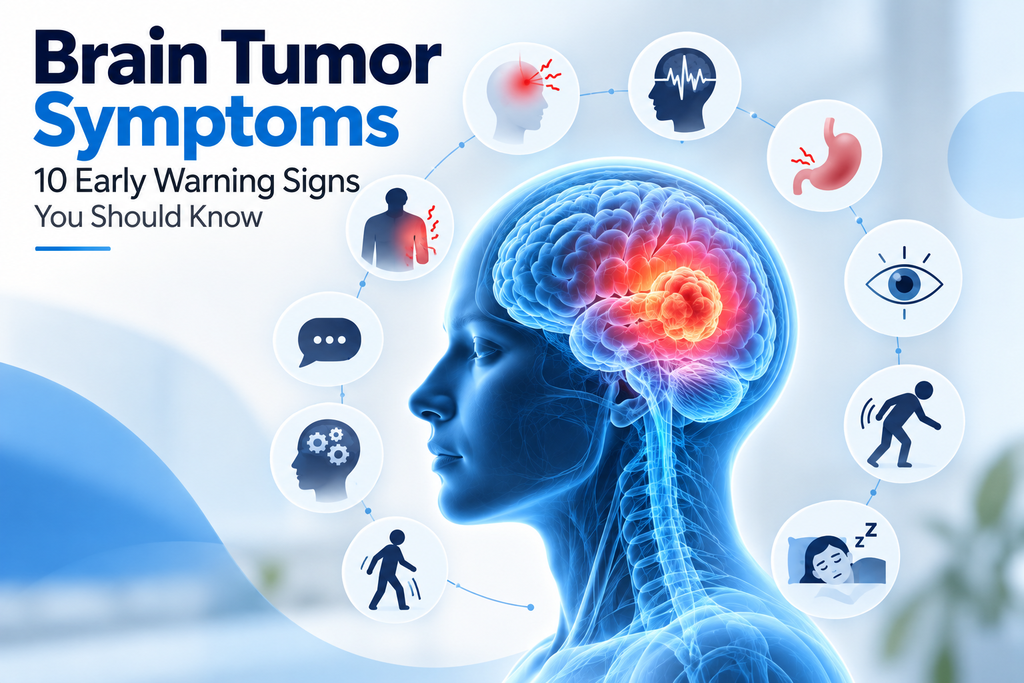
Experiencing a new or unusual headache, vision change, seizure, or unexplained weakness can naturally raise concerns about your brain health. But it is important to remember that many of these symptoms can have causes unrelated to a brain tumor.
Understanding common brain tumor symptoms can help you recognize when a symptom should be medically evaluated and when emergency care may be necessary. Symptoms can vary significantly depending on the tumor’s location, size, type, and rate of growth.
This guide explains common warning signs, when to see a doctor, how brain tumors are diagnosed, and when a neurosurgical evaluation may be appropriate.
What Is a Brain Tumor?
A brain tumor is an abnormal growth of cells within the brain. Brain tumors can be benign (non-cancerous) or malignant (cancerous).
A benign tumor does not necessarily mean that it is harmless. Because the skull has limited space, even a slow-growing tumor can sometimes affect surrounding brain structures or increase pressure within the skull.
Similarly, symptoms are not determined only by whether a tumor is benign or malignant. The location, size, growth rate, and structures affected can all influence how a person feels.
Different areas of the brain control different functions, including movement, speech, vision, memory, coordination, and behaviour. As a result, brain tumor symptoms can vary considerably from one person to another.
What Are the Common Brain Tumor Symptoms?
There is no single symptom that confirms the presence of a brain tumor.
Possible symptoms can include:
- Persistent or worsening headaches
- Seizures
- Nausea and vomiting
- Vision changes
- Weakness or numbness
- Balance and coordination problems
- Speech or language difficulties
- Memory or thinking changes
- Personality or behavioural changes
- Difficulty walking
- Changes in alertness or consciousness
Many of these symptoms can also occur because of migraines, infections, medication effects, metabolic conditions, or other neurological problems. Therefore, symptoms should not be used to self-diagnose a brain tumor.
10 Brain Tumor Warning Signs You Should Know
1. Persistent or Worsening Headaches
Headaches are extremely common and are usually caused by conditions such as migraine, tension-type headaches, dehydration, stress, or other everyday factors.
A headache may deserve medical evaluation when it is:
- New or significantly different from previous headaches
- Becoming progressively more frequent or severe
- Persistent rather than settling
- Associated with repeated vomiting
- Accompanied by weakness, numbness, vision changes, confusion, or seizures
- Worse with coughing, straining, bending, or lying flat
However, a headache does not automatically mean a brain tumor. Most headaches are not caused by brain tumors.
2. New or Unexplained Seizures
A seizure occurs when there is abnormal electrical activity in the brain.
A first seizure in an adult requires prompt medical evaluation. Seizures can sometimes be associated with structural abnormalities in the brain, including tumors.
A seizure may involve:
- Uncontrolled movements or jerking
- Stiffening
- Loss of awareness
- Staring or unresponsiveness
- Temporary confusion
- Repeated twitching of one limb
- Unusual sensations or speech changes
A seizure lasting more than five minutes, repeated seizures without recovery, breathing difficulties, or serious injury requires emergency medical care.
3. Persistent Nausea and Vomiting
Nausea and vomiting have many possible causes and do not automatically indicate a brain tumor.
However, persistent or repeated vomiting may need medical assessment, particularly when it occurs alongside:
- Worsening headaches
- Vision changes
- Drowsiness
- Confusion
- Weakness
- Other neurological symptoms
Morning symptoms can occur in some brain conditions, but morning nausea or vomiting alone does not confirm a brain tumor.
4. Vision Changes
Changes in vision can occur for many reasons. Depending on which areas of the brain or visual pathways are affected, possible symptoms may include:
- Blurred vision
- Double vision
- Loss of part of the visual field
- Difficulty seeing to one side
- Other changes in visual processing
Persistent or progressive vision changes should be evaluated.
Sudden vision loss or sudden double vision is an emergency, as it can occur with stroke or other urgent conditions and is not specific to brain tumors.
5. Weakness or Numbness
A brain condition can sometimes affect movement or sensation, particularly when a specific area responsible for these functions is involved.
Possible symptoms include:
- Weakness in an arm or leg
- Numbness or altered sensation
- Facial weakness
- Difficulty holding objects
- Difficulty using one hand
- Progressive difficulty climbing stairs
Sudden one-sided weakness or numbness requires emergency evaluation, because stroke is one possible cause.
6. Balance and Coordination Problems
Problems with balance or coordination can sometimes occur when areas of the brain involved in movement and coordination are affected.
You may notice:
- Unsteadiness
- Frequent falls
- Clumsiness
- Difficulty standing or walking
- Trouble with fine motor tasks
- Poor coordination
These symptoms can also result from inner-ear problems, medications, musculoskeletal conditions, or other neurological disorders. New, progressive, or severe symptoms should be medically assessed.
7. Speech or Language Changes
Depending on which area of the brain is affected, a person may develop changes in their ability to communicate.
These can include:
- Difficulty finding words
- Trouble understanding speech
- Slurred speech
- Difficulty reading or writing
- Trouble expressing thoughts
- Difficulty following instructions
Sudden speech difficulty or inability to understand speech requires immediate emergency evaluation, as it can be a sign of stroke.
8. Memory, Thinking, or Personality Changes
Changes in memory, thinking, judgement, or behaviour may sometimes occur with conditions affecting the brain.
Possible changes include:
- New memory problems
- Difficulty concentrating
- Confusion in familiar situations
- Difficulty following instructions
- Slower thinking
- Difficulty planning or solving problems
- Unusual irritability
- Marked changes in mood or behaviour
- Reduced judgement
These changes can have many possible causes, so they should not automatically be attributed to a brain tumor. Persistent or progressive changes should be evaluated by a healthcare professional.
9. Difficulty Walking
Walking difficulties can result from weakness, balance problems, coordination issues, dizziness, or other neurological changes.
Progressive difficulty walking, repeated falls, or walking problems occurring together with headaches, vomiting, weakness, or vision changes should be assessed promptly.
10. Changes in Alertness or Consciousness
Changes in alertness can include:
- Unusual sleepiness
- Difficulty staying awake
- New confusion
- Reduced responsiveness
- Loss of consciousness
- Increasing difficulty waking someone
A person who is difficult to wake, becomes suddenly confused, has abnormal breathing, or remains unconscious requires emergency medical care.
Can a Headache Mean You Have a Brain Tumor?
Not necessarily.
Most headaches are not caused by brain tumors. A headache becomes more important to evaluate when it represents a significant change from your usual pattern or occurs alongside other neurological symptoms.
Seek medical evaluation if you experience:
- A new or distinctly different headache
- A headache that progressively worsens
- Repeated vomiting with headache
- Headaches that wake you from sleep
- Headaches associated with weakness or numbness
- Vision or speech changes
- Confusion or seizures
A sudden, extremely severe headache that reaches maximum intensity within seconds or minutes is an emergency because it can indicate bleeding in the brain or another serious condition. It is not specific to brain tumors.
Do Brain Tumor Symptoms Depend on Where the Tumor Is Located?
Yes. Symptoms can vary depending on which part of the brain is affected.
For example:
- Frontal areas: Changes in behaviour, judgement, planning, movement, or speech
- Temporal areas: Memory, language, or seizure-related symptoms
- Parietal areas: Sensory or spatial-awareness difficulties
- Occipital areas: Visual changes
- Cerebellum: Balance and coordination problems
- Brainstem: Possible changes involving eye movement, swallowing, speech, facial function, or balance
However, these associations are not diagnostic. Symptoms cannot reliably determine the location or type of a tumor without medical evaluation and appropriate testing.
When Should You See a Neurosurgeon?
Not everyone experiencing a headache or neurological symptom needs to see a neurosurgeon.
A medical evaluation is appropriate when symptoms are new, persistent, progressive, or unexplained.
A neurosurgical consultation may become appropriate when:
- Brain imaging identifies a mass or lesion
- A specialist opinion is needed
- A biopsy or surgical opinion is being considered
- A lesion is affecting important brain structures
- Surgical removal or decompression may be considered
- Procedural treatment options need to be discussed
A neurologist may initially evaluate unexplained seizures, persistent headaches with neurological features, memory changes, balance problems, or other progressive neurological symptoms. A neurosurgeon may become involved when imaging identifies a structural brain lesion or when a procedure or surgical opinion is being considered.
If you’re looking for a neurosurgeon in Hyderabad, a specialist evaluation can help you understand what your symptoms or brain imaging may require and what treatment options may be appropriate.
When Are Brain Tumor Symptoms an Emergency?
Some symptoms require immediate emergency medical attention rather than waiting for a routine appointment.
Call 108 or go to the nearest emergency department immediately if you experience:
- Sudden, severe headache
- A first seizure
- A seizure lasting more than five minutes
- Repeated seizures without recovery
- Sudden weakness or numbness, especially on one side
- Sudden facial drooping
- Sudden speech or language difficulty
- Sudden vision loss
- Severe new double vision
- Sudden severe difficulty walking
- Loss of consciousness
- Severe confusion
- Difficulty waking someone
- Repeated vomiting with severe headache or reduced alertness
These symptoms can occur with stroke, bleeding, infection, seizure disorders, or other emergencies. They should not automatically be labelled as symptoms of a brain tumor.
How Are Brain Tumors Diagnosed?
Symptoms alone cannot confirm a brain tumor. Diagnosis usually involves a step-by-step medical evaluation.
Medical History and Neurological Examination
A doctor may assess:
- When symptoms started
- Whether they are getting worse
- Headache patterns
- Seizure details
- Vision and speech changes
- Movement and balance
- Medical history
- Previous imaging
A neurological examination may assess strength, sensation, reflexes, coordination, balance, vision, speech, and cognitive function.
MRI and CT Scans
MRI provides detailed images of the brain and is commonly used to evaluate suspected brain tumors.
A CT scan may be used when rapid imaging is required, particularly in emergency situations, or when MRI cannot be performed.
The choice of imaging depends on the patient’s symptoms and clinical situation.
Biopsy and Other Investigations
In some cases, tissue examination may be required to determine the exact type and grade of a tumor.
Depending on the suspected condition, doctors may also recommend other investigations, such as blood tests, EEG for seizures, or additional imaging.
Not every patient requires every test.
How Are Brain Tumors Treated?
Treatment depends on several factors, including:
- Tumor type
- Whether it is benign or malignant
- Location
- Size
- Growth rate
- Grade
- Symptoms
- Molecular characteristics
- Overall health
Active Surveillance
Some small, slow-growing, or asymptomatic tumors may be monitored with regular medical reviews and MRI scans.
Surgery
Surgery may be considered to obtain tissue for diagnosis, remove as much of a tumor as safely possible, reduce pressure, or relieve symptoms.
However, not every brain tumor can or should be completely removed. Its location and relationship to important brain structures play an important role in treatment decisions.
Radiation and Other Treatments
Depending on the tumor, treatment may also include radiation therapy, stereotactic radiosurgery, chemotherapy, targeted therapies, or supportive treatment.
The appropriate combination depends on the individual diagnosis and tumor characteristics.
Frequently Asked Questions
What are the early signs of a brain tumor?
Possible symptoms include new or worsening headaches, seizures, vision changes, progressive weakness or numbness, balance problems, speech changes, memory difficulties, and personality or behavioural changes. These symptoms can have many other causes and do not confirm a brain tumor.
Does every headache mean a brain tumor?
No. Most headaches are not caused by brain tumors. A new, unusual, progressively worsening headache or one accompanied by neurological symptoms should be medically evaluated.
Can a brain tumor cause dizziness or balance problems?
Yes, a brain condition can sometimes affect balance and coordination. However, dizziness and balance problems also have many other possible causes.
When should I see a neurosurgeon for brain tumor symptoms?
A neurosurgical evaluation may be appropriate when brain imaging identifies a lesion or when a biopsy, surgical opinion, decompression, or another procedural treatment is being considered.
Can brain tumors cause seizures?
Yes. Seizures can occur with some brain tumors, particularly when the tumor affects or irritates surrounding brain tissue. A first seizure requires prompt medical evaluation.
How are brain tumors diagnosed?
Evaluation may include a medical history, neurological examination, MRI, CT, and sometimes biopsy or other investigations. The exact tests depend on the individual situation.
Do all brain tumors require surgery?
No. Some tumors may be monitored, while others may require surgery, radiation, medication, or a combination of treatments depending on their characteristics.
When are brain tumor symptoms an emergency?
Sudden severe headache, a first seizure, prolonged or repeated seizures, sudden weakness, speech or vision changes, loss of consciousness, severe confusion, or difficulty waking someone require emergency medical attention.
When to Consult a Neurosurgeon in Hyderabad
If you or a family member has new, persistent, or progressively worsening neurological symptoms, medical evaluation can help identify the cause and determine the appropriate next step.
If brain imaging has identified a lesion or you have been advised to seek a neurosurgical opinion, you can consult Dr. Ravi Kiran – Neuro & Spine, Hyderabad for evaluation of brain and spine conditions.
If your symptoms are sudden or severe, do not wait for a routine consultation. Go to the nearest emergency department or call 108.
Book an Appointment with Dr. Ravi Kiran
Medical disclaimer: This article is for general health information and does not diagnose or treat brain tumors. Headaches and other neurological symptoms can have many causes. If symptoms are new, persistent, or worsening, consult a qualified healthcare professional. Seek emergency care for sudden severe headache, a first seizure, sudden weakness, speech or vision changes, loss of consciousness, or difficulty waking someone.