National Epilepsy Day 2026: Understanding Epilepsy, Symptoms, Causes & Treatment
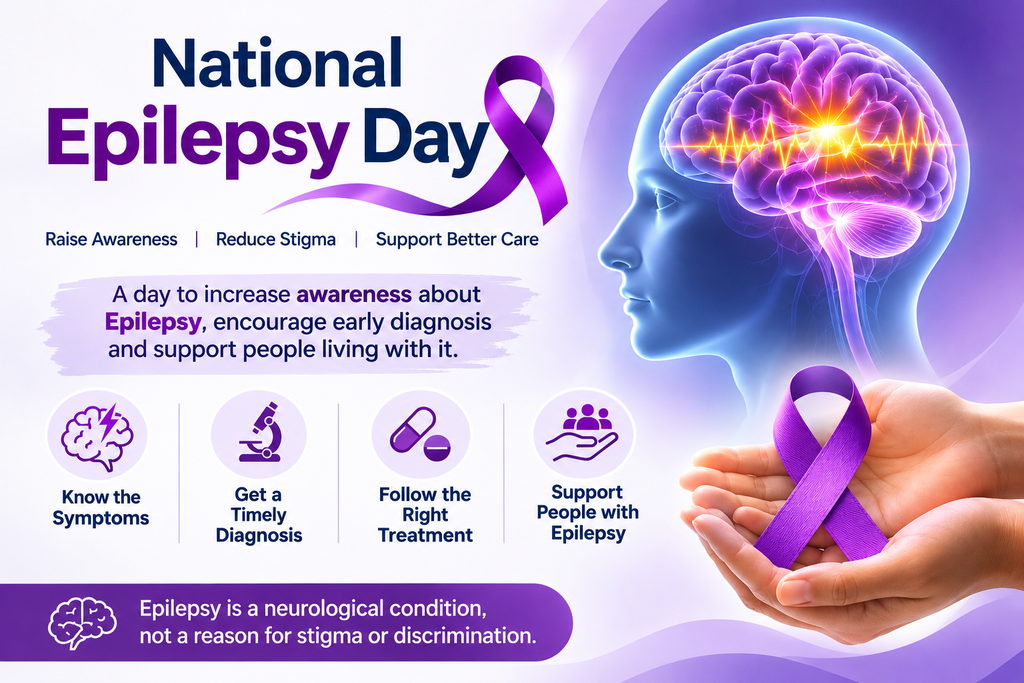
Epilepsy is a neurological condition that affects people of all ages. It is associated with recurrent seizures caused by abnormal electrical activity in the brain. Although epilepsy is a recognised medical condition, misconceptions and social stigma continue to affect people living with it.
Every year, November 17 is observed as National Epilepsy Day in India to increase awareness, encourage timely diagnosis and promote understanding of epilepsy.
A seizure does not always involve falling down or uncontrollable shaking. Some seizures may appear as brief staring episodes, unusual sensations, sudden confusion or involuntary movements.
Understanding the symptoms, causes, diagnosis and treatment options can help patients and families respond appropriately and seek medical attention when needed.
What Is Epilepsy?
Epilepsy is a chronic neurological condition characterised by a tendency to experience recurrent unprovoked seizures.
A seizure occurs when there is a sudden disturbance in the electrical activity of the brain. Depending on the area of the brain involved, a seizure may affect awareness, movement, sensation, behaviour or other functions.
Some seizures last only a few seconds, while others may involve loss of consciousness and involuntary body movements.
It is important to understand that having one seizure does not automatically mean a person has epilepsy. Seizures can occur due to several temporary or underlying medical conditions. A proper medical evaluation is necessary to identify the cause.
What Are the Different Types of Epileptic Seizures?
Epileptic seizures can present in different ways depending on where the abnormal electrical activity begins and how it spreads.
1. Focal Seizures
Focal seizures begin in one part of the brain.
Possible symptoms include:
- Unusual sensations or feelings.
- Sudden changes in smell, taste or vision.
- Repetitive movements such as lip-smacking.
- Sudden confusion or changes in awareness.
- Unusual movements involving one part of the body.
Some people remain aware during focal seizures, while others may experience impaired awareness.
2. Generalised Seizures
Generalised seizures involve networks on both sides of the brain from the beginning.
Different forms include:
- Tonic-clonic seizures: The body may become stiff, followed by rhythmic jerking movements and loss of consciousness.
- Absence seizures: Brief episodes of staring or reduced awareness, sometimes lasting only a few seconds.
- Myoclonic seizures: Sudden, brief muscle jerks involving one or more parts of the body.
- Atonic seizures: Sudden loss of muscle tone that may cause a person to fall.
- Tonic seizures: Sudden muscle stiffening.
The appearance of a seizure alone cannot reliably establish its type. Specialist assessment is important.
What Are the Common Symptoms of Epilepsy?
Epilepsy symptoms vary from person to person. Not every seizure involves convulsions or loss of consciousness.
Common signs may include:
- Sudden loss or alteration of awareness.
- Uncontrolled jerking movements.
- Stiffening of the body.
- Brief staring episodes.
- Sudden unusual sensations or feelings.
- Repetitive movements without awareness.
- Temporary confusion after a seizure.
- Unexplained tiredness or sleepiness following an episode.
- Temporary difficulty speaking or responding.
Some people may also experience headaches, muscle soreness or temporary weakness after a seizure.
Recognising these symptoms can help families provide useful information during medical evaluation.
What Causes Epilepsy?
Epilepsy can develop due to different conditions affecting the brain. However, the exact cause is not identified in every patient.
Possible causes include:
1. Genetic Factors
Certain genetic changes may influence how brain cells communicate and may increase the likelihood of seizures.
2. Head Injuries
Significant head injuries may damage brain tissue and increase the risk of developing seizures.
3. Brain Infections
Infections involving the brain, such as meningitis, encephalitis and neurocysticercosis, may contribute to epilepsy.
4. Stroke
A stroke can damage brain tissue due to interrupted blood supply or bleeding. In some individuals, this damage may later contribute to seizures.
5. Structural Brain Abnormalities
Certain developmental abnormalities or structural changes in the brain may be associated with epilepsy.
6. Brain Tumours
Some brain tumours may irritate or affect surrounding brain tissue and contribute to seizure activity.
7. Unknown Causes
In many individuals, investigations may not identify a specific cause. This does not mean that the symptoms are not genuine or that treatment cannot help.
How Is Epilepsy Diagnosed?
Diagnosing epilepsy involves understanding the patient’s symptoms, medical history and the characteristics of the episodes.
A doctor may ask about:
- What happened before the episode.
- Whether the person lost awareness.
- Movements or sensations experienced during the event.
- How long the episode lasted.
- How the person behaved afterwards.
- Whether similar episodes occurred previously.
- Any history of head injury, infection or other neurological conditions.
Information from someone who witnessed the episode can be particularly useful.
Depending on the clinical findings, the following investigations may be recommended.
1. Electroencephalogram (EEG)
An EEG records the electrical activity of the brain. It may help identify patterns associated with epilepsy and support seizure classification.
A normal EEG does not necessarily exclude epilepsy.
2. MRI Brain
An MRI scan provides detailed images of brain structures. It may help identify abnormalities, previous injuries, tumours or other structural changes associated with seizures.
3. CT Scan
A CT scan may be used in selected situations, particularly when urgent assessment of bleeding, injury or other structural problems is needed.
4. Blood Tests
Blood investigations may help identify metabolic abnormalities, infections or other conditions that could contribute to seizures.
The doctor decides which tests are appropriate based on the patient’s history and examination.
What Are the Treatment Options for Epilepsy?
Epilepsy treatment depends on the seizure type, underlying cause, age, overall health and individual medical circumstances.
The main goal is to control seizures while minimising treatment-related side effects.
1. Anti-Seizure Medications
Anti-seizure medicines are commonly used to manage epilepsy.
The choice of medicine depends on the type of seizure and the patient’s individual circumstances.
Patients should:
- Take medication according to the prescribed schedule.
- Avoid changing doses without medical advice.
- Attend recommended follow-up appointments.
- Inform their doctor about possible side effects.
- Avoid stopping medication suddenly without consulting their treating doctor.
The World Health Organization reports that up to 70% of people living with epilepsy could become seizure-free with appropriate diagnosis and treatment.
2. Epilepsy Surgery
Some patients continue to experience seizures despite appropriate medication.
In selected cases, epilepsy surgery may be considered when investigations identify a specific brain region responsible for seizure activity and surgery is clinically appropriate.
Evaluation may involve:
- Detailed seizure history.
- Video EEG monitoring.
- MRI brain.
- Neuropsychological assessment.
- Additional specialised investigations when required.
The aim of epilepsy surgery is to reduce or control seizures while preserving important brain functions. Suitability depends on individual clinical findings.
3. Other Treatment Approaches
For selected patients whose seizures remain difficult to control, specialists may consider additional options such as:
- Vagus nerve stimulation.
- Ketogenic dietary therapy under specialist supervision.
- Other forms of neuromodulation in appropriate cases.
These approaches are not suitable for everyone and require individual evaluation.
What Should You Do If Someone Has a Seizure?
Knowing basic seizure first aid can help prevent injuries and protect someone during an episode.
What You Should Do
- Stay calm: Remain with the person and observe what is happening.
- Protect from injury: Move nearby sharp, hard or dangerous objects away.
- Protect the head: Place something soft and flat under the head.
- Loosen tight clothing: Loosen tight items around the neck if possible.
- Time the seizure: Note when the seizure starts and how long it lasts.
- Turn them onto their side: When the convulsive movements stop, gently place the person on their side if possible to help keep the airway clear.
- Stay with them: Remain nearby until they recover and become responsive.
What You Should Never Do
- Do not put a spoon, fingers, cloth or any object inside the person’s mouth.
- Do not try to force the mouth open.
- Do not hold the person down or restrain their movements.
- Do not give food, water or oral medication until the person is fully alert.
- Do not attempt to stop the movements by force.
When Is a Seizure an Emergency?
Seek emergency medical help if:
- The seizure lasts five minutes or longer.
- Another seizure starts before the person has recovered.
- The person has difficulty breathing or waking up afterwards.
- The person is injured during the episode.
- The seizure occurs in water.
- It is the person’s first known seizure.
- The person is pregnant or has another significant medical condition that increases risk.
Prolonged seizures require immediate medical attention.
Can People With Epilepsy Lead Normal Lives?
Many people living with epilepsy can participate in education, employment, family activities and social life with appropriate medical care.
However, individual needs may differ depending on seizure control, treatment response and other health factors.
Some important considerations include:
- Taking prescribed medication regularly.
- Maintaining a consistent sleep routine.
- Attending medical follow-up appointments.
- Understanding personal seizure triggers, if identified.
- Following appropriate safety precautions.
- Discussing driving and workplace safety with a doctor.
- Seeking emotional and family support when needed.
Epilepsy is not contagious. People living with epilepsy should not face discrimination or social isolation because of their condition.
Common Myths and Facts About Epilepsy
| Myth | Fact |
|---|---|
| Epilepsy is contagious. | Epilepsy cannot spread from one person to another. |
| Every seizure involves shaking. | Some seizures involve staring, unusual sensations or changes in awareness. |
| One seizure always means epilepsy. | A single seizure does not automatically establish an epilepsy diagnosis. |
| Nothing can be done for epilepsy. | Several treatment approaches are available, and many people achieve good seizure control. |
| People with epilepsy cannot work or study. | Many people with epilepsy participate in education and employment with appropriate care and safety planning. |
| Something should be placed inside the mouth during a seizure. | Nothing should be placed inside the mouth during a seizure. |
Frequently Asked Questions About Epilepsy
1. Is epilepsy a lifelong condition?
Epilepsy can be a long-term condition, but its course varies. Some people achieve sustained seizure control, while others may require long-term treatment and monitoring.
2. Can epilepsy develop at any age?
Yes. Epilepsy can develop during childhood, adolescence or adulthood. Its causes and presentation may vary with age.
3. Does every person with epilepsy need brain surgery?
No. Most treatment plans begin with anti-seizure medication. Surgery is considered only for selected patients after specialised evaluation.
4. Can epilepsy be controlled with medication?
Many people achieve good seizure control with appropriate anti-seizure medicines. Treatment and medication selection should be individualised.
5. What is the difference between a seizure and epilepsy?
A seizure is an episode of abnormal electrical activity in the brain. Epilepsy is a neurological condition involving a tendency to experience recurrent unprovoked seizures.
6. When should someone consult a neurologist or neurosurgeon?
A person experiencing a suspected seizure should undergo medical evaluation. Specialist assessment may be needed for recurrent seizures, abnormal neurological findings, structural brain abnormalities or seizures that remain uncontrolled despite treatment.
Conclusion
National Epilepsy Day is an opportunity to improve awareness, encourage timely medical evaluation and challenge misconceptions surrounding epilepsy.
Understanding seizure symptoms, knowing basic first aid and following appropriate treatment can make an important difference in the lives of people living with epilepsy.
Epilepsy is a medical condition, not a reason for discrimination or social isolation. With appropriate diagnosis, treatment and support, many people can manage the condition and participate in everyday life.
Medical Disclaimer: This article is intended for general educational purposes only. It does not replace professional medical advice, diagnosis or treatment. Treatment decisions should be made by a qualified healthcare professional after an individual clinical assessment.