Brain Aneurysm: Symptoms, Causes, Diagnosis & Treatment
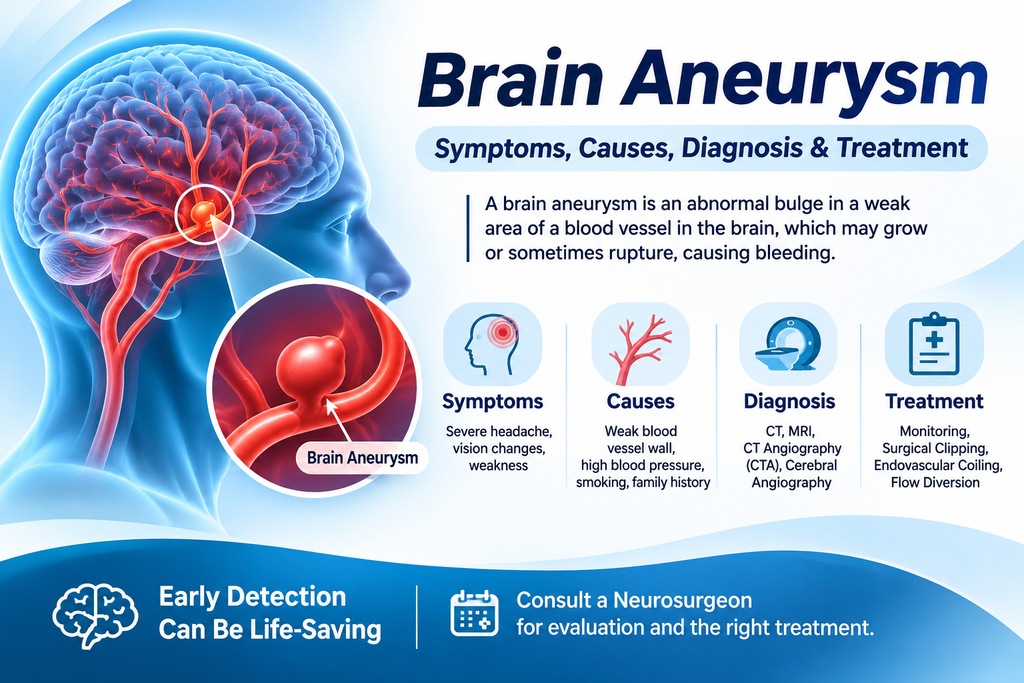
A brain aneurysm is an abnormal bulge that develops in a weak area of a blood vessel in the brain. Many brain aneurysms do not cause symptoms and may remain undetected for years. However, if an aneurysm grows or ruptures, it can lead to serious complications, including bleeding around the brain.
Understanding the symptoms, risk factors and available treatment options can help people recognise warning signs and seek timely medical attention.
What Is a Brain Aneurysm?
A brain aneurysm, also called a cerebral aneurysm, occurs when a weakened section of an artery wall balloons outward and fills with blood.
Aneurysms commonly develop at branching points of arteries around the base of the brain. They vary in size, shape and location.
A brain aneurysm may be:
- Unruptured: The aneurysm has not burst. Many small aneurysms do not cause symptoms.
- Ruptured: The aneurysm has burst, causing bleeding into the space around the brain. This is a medical emergency.
A ruptured brain aneurysm can cause a type of bleeding called subarachnoid haemorrhage.
What Are the Types of Brain Aneurysms?
Brain aneurysms are commonly classified according to their shape.
1. Saccular Aneurysm
Also known as a berry aneurysm, this type appears as a rounded pouch projecting from an artery. It is the most common type of brain aneurysm.
2. Fusiform Aneurysm
A fusiform aneurysm involves widening of a section of the blood vessel rather than forming a distinct pouch on one side.
3. Mycotic Aneurysm
A mycotic aneurysm is associated with an infection that weakens the wall of a blood vessel. Despite the name, it is not necessarily caused by a fungal infection.
What Are the Symptoms of a Brain Aneurysm?
Symptoms depend on whether the aneurysm is unruptured, growing, leaking or ruptured.
Symptoms of an Unruptured Brain Aneurysm
Many unruptured brain aneurysms do not cause noticeable symptoms. Larger aneurysms may press on nearby brain tissue or nerves and cause:
- Pain above or behind the eye
- Double vision or other changes in vision
- Drooping eyelid
- Numbness or weakness on one side of the face
- Difficulty with balance
- Dilated pupil
- Persistent or unusual headaches
These symptoms can also occur with other medical conditions. A medical evaluation is necessary to identify the underlying cause.
Symptoms of a Ruptured Brain Aneurysm
When a brain aneurysm ruptures, it may cause a sudden, extremely severe headache, often described as the worst headache a person has ever experienced.
Other possible symptoms include:
- Sudden severe headache
- Nausea and vomiting
- Neck stiffness
- Sensitivity to light
- Blurred or double vision
- Seizures
- Loss of consciousness
- Sudden weakness or difficulty speaking
Important: A sudden, severe headache, especially with vomiting, neck stiffness, fainting or neurological symptoms, requires immediate emergency medical attention. Do not wait for the symptoms to improve or attempt to travel to hospital by yourself.
What Causes a Brain Aneurysm?
A brain aneurysm develops when a section of an artery wall becomes weak. The exact cause is not always known.
Factors associated with a higher likelihood of developing a brain aneurysm include:
1. High Blood Pressure
Long-standing uncontrolled high blood pressure can place additional stress on artery walls.
2. Smoking
Smoking is associated with the development and rupture of brain aneurysms.
3. Family History
Having a close family member with a brain aneurysm may increase a person’s risk.
4. Genetic Conditions
Certain inherited conditions, including autosomal dominant polycystic kidney disease and some connective tissue disorders, are associated with an increased risk.
5. Age and Other Health Factors
Brain aneurysms can occur at different ages, although they are more commonly identified in adults. Certain blood vessel and health conditions may also contribute to risk.
Having one or more risk factors does not mean that a person will definitely develop a brain aneurysm.
How Is a Brain Aneurysm Diagnosed?
Diagnosis involves reviewing medical history, assessing symptoms and selecting appropriate imaging investigations.
A neurosurgeon or specialist may recommend the following tests.
1. CT Scan
A CT scan can help identify bleeding around the brain, particularly when a ruptured aneurysm is suspected.
2. CT Angiography (CTA)
CT angiography uses contrast material to create detailed images of blood vessels. It can help identify an aneurysm and assess its size, shape and location.
3. MRI and MR Angiography (MRA)
MRI provides detailed images of the brain. MR angiography focuses on blood vessels and may be used to detect and monitor certain unruptured aneurysms.
4. Cerebral Angiography
Cerebral angiography is a specialised investigation that provides detailed images of the blood vessels supplying the brain. It may be recommended when more precise information is needed for diagnosis or treatment planning.
The choice of investigation depends on the patient’s symptoms and clinical condition.
What Are the Treatment Options for a Brain Aneurysm?
Treatment depends on several factors, including:
- Size and location of the aneurysm
- Shape and appearance of the aneurysm
- Whether it has ruptured
- Whether it is growing or causing symptoms
- Patient’s age and general health
- Personal and family medical history
- Potential risks of treatment compared with the risk of rupture
Not every unruptured brain aneurysm requires immediate treatment. Some may be monitored with regular imaging, while others may need preventive intervention.
1. Regular Monitoring
For selected small, unruptured aneurysms, a specialist may recommend periodic imaging to check for changes in size or shape.
Blood pressure management and stopping smoking are important parts of risk reduction.
2. Surgical Clipping
Surgical clipping is a procedure in which a neurosurgeon places a small metal clip across the neck of the aneurysm to stop blood from entering it.
The procedure involves accessing the aneurysm through an opening in the skull. It may be considered depending on the aneurysm’s location, shape and other clinical factors.
3. Endovascular Coiling
Endovascular coiling is a minimally invasive procedure performed through a blood vessel.
A catheter is guided towards the aneurysm, and small coils are placed inside it to reduce blood flow into the aneurysm and promote clot formation.
4. Flow Diversion
A flow-diverting device is a specialised stent placed inside the parent blood vessel. It redirects blood flow away from the aneurysm and encourages the vessel wall to heal over time.
It may be suitable for selected aneurysms depending on their size, shape and location.
5. Treatment After Rupture
A ruptured brain aneurysm requires emergency hospital treatment. The medical team works to secure the aneurysm and manage complications such as bleeding, changes in blood flow and increased pressure within the skull.
The treatment plan may involve surgical or endovascular procedures, medicines, close monitoring and rehabilitation.
Can Brain Aneurysms Be Prevented?
Not all brain aneurysms can be prevented, particularly those associated with inherited or structural factors. However, certain lifestyle and health measures may help reduce modifiable risks:
- Keep blood pressure under control.
- Avoid smoking and seek support to quit.
- Avoid recreational stimulant drugs such as cocaine.
- Maintain a balanced diet and regular physical activity.
- Attend medical follow-ups if an aneurysm has already been diagnosed.
- Discuss screening with a doctor if there is a significant family history or an associated inherited condition.
These measures do not guarantee that an aneurysm will not develop or rupture.
Frequently Asked Questions
1. Can a brain aneurysm exist without symptoms?
Yes. Many brain aneurysms do not cause symptoms and are discovered incidentally during imaging performed for another medical reason.
2. Is every brain aneurysm dangerous?
Not every aneurysm ruptures. The risk varies according to its size, location, shape, growth and individual patient factors. A specialist can assess whether monitoring or treatment is appropriate.
3. Can a brain aneurysm cause a stroke?
Yes. A ruptured brain aneurysm can cause bleeding around the brain, known as subarachnoid haemorrhage. This can lead to serious complications, including brain injury and stroke.
4. Which scan can detect a brain aneurysm?
CT angiography and MR angiography are commonly used to identify brain aneurysms. Cerebral angiography may be recommended when more detailed vascular information is needed.
5. Does every brain aneurysm require surgery?
No. Some unruptured aneurysms may be monitored with regular imaging. Others may require preventive treatment depending on their characteristics and the patient’s overall risk.
6. When should I consult a neurosurgeon?
Seek medical evaluation if you experience persistent or unusual headaches, visual changes or other unexplained neurological symptoms. A sudden, extremely severe headache or loss of consciousness requires immediate emergency care.
Conclusion
A brain aneurysm is a condition involving a weakened area of an artery in the brain. While many aneurysms remain unruptured and cause no symptoms, a rupture can lead to serious bleeding and requires emergency treatment.
Recognising warning signs, understanding individual risk factors and receiving appropriate medical evaluation are important steps in managing this condition. A specialist can assess the aneurysm and recommend monitoring, surgical clipping or an endovascular treatment based on the individual case.
Disclaimer: This article is intended for general educational purposes only. It does not replace professional medical advice, diagnosis or treatment. Treatment decisions should be made by a qualified medical professional after individual evaluation.