Head Injury: Symptoms, Warning Signs & Treatment
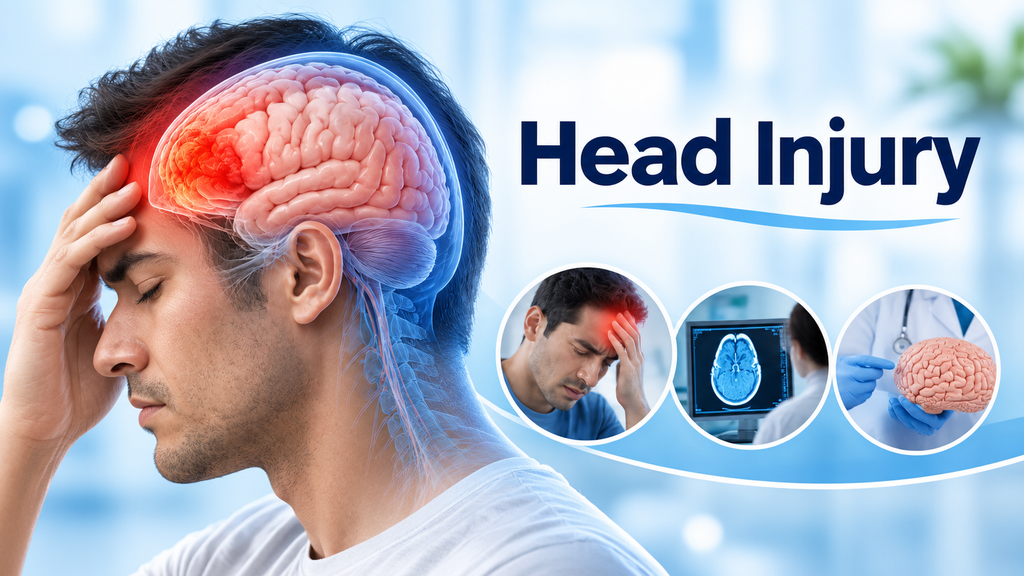
A head injury can happen due to a road accident, a fall, a sports injury or a direct blow to the head. While some injuries cause only minor pain or swelling, others can affect the brain and require urgent medical attention. Recognising head injury symptoms early is important to identify warning signs and understand when medical care is needed.
Head injuries can affect the scalp, skull or brain. Some symptoms appear immediately after an accident, while others may develop hours or days later. Knowing the difference between common symptoms and emergency warning signs can help people make informed decisions about seeking medical care.
Important: If a person experiences repeated vomiting, worsening headache, seizures, weakness, increasing confusion, loss of consciousness or difficulty waking up after a head injury, seek emergency medical care immediately.
What Is a Head Injury?
A head injury is damage to the scalp, skull or brain caused by an external force. It may occur after a road traffic accident, a fall, a sports-related impact or another traumatic event.
The severity of a head injury depends on the force of the impact, the structures affected and the person’s clinical condition. A visible wound does not always indicate how serious an injury is. In some cases, internal bleeding or brain injury may occur without a major external wound.
Types of Head Injuries
Scalp injury: Damage to the skin and soft tissues of the scalp. Even a small scalp wound can bleed significantly.
Skull fracture: A break in one of the bones forming the skull. Some skull fractures may be associated with injuries to the brain or surrounding structures.
Concussion: A type of traumatic brain injury that can temporarily affect memory, concentration, balance, sleep and other brain functions.
Intracranial bleeding: Bleeding inside the skull, including bleeding around or within the brain. Depending on its location and severity, it may require urgent treatment.
Brain swelling: Swelling following trauma can increase pressure inside the skull and may require hospital monitoring or specialist treatment.
What Are the Common Head Injury Symptoms?
The symptoms of a head injury can vary from person to person. They depend on the nature of the impact and whether the injury affects the scalp, skull or brain.
Common head injury symptoms include:
- Headache or tenderness around the injured area
- Dizziness or light-headedness
- Nausea or vomiting
- Blurred or double vision
- Sensitivity to light or noise
- Ringing in the ears
- Confusion or feeling dazed
- Difficulty concentrating or remembering events
- Unusual tiredness or changes in sleep
- Irritability or mood changes
- Problems with balance or coordination
These symptoms may occur after a concussion or another type of head injury. However, symptoms alone cannot reliably establish whether there is bleeding inside the skull. A medical assessment may be needed to determine the cause and severity.
Serious Head Injury Symptoms: Warning Signs You Should Never Ignore
Some head injury symptoms may indicate a serious complication and require immediate medical attention.
Seek emergency care if the injured person has any of the following warning signs:
- Loss of consciousness or difficulty waking up
- Repeated vomiting
- A severe or progressively worsening headache
- Seizures or convulsions
- Weakness or numbness in an arm or leg
- Slurred speech or difficulty understanding speech
- Increasing confusion, agitation or unusual behaviour
- New problems with walking or maintaining balance
- Unequal pupil sizes
- Blood or clear fluid coming from the ears or nose
- A visible dent in the skull or a deep penetrating wound
- Significant bruising around the eyes or behind the ears after the injury
Do not wait for these symptoms to improve on their own. Call local emergency services or go to the nearest emergency department.
If a neck or spinal injury is possible, avoid unnecessary movement of the person’s head and neck. Do not remove an object embedded in the head.
Can Head Injury Symptoms Appear Later?
Yes. Some head injury symptoms may develop hours or days after the initial impact. A person may initially appear well but later experience changes that require medical assessment.
Delayed head injury symptoms may include:
- A headache that gradually becomes worse
- Increasing drowsiness or difficulty staying awake
- Repeated vomiting
- New weakness, numbness or clumsiness
- Problems with memory or concentration
- Changes in personality or behaviour
- Difficulty walking or maintaining balance
- Changes in vision or hearing
- Seizures
Older adults and people taking blood-thinning medicines or living with bleeding disorders may have a higher risk of complications after a head injury.
Do not ignore new or worsening symptoms simply because the person seemed normal immediately after the accident. If concerning symptoms develop, seek urgent medical care.
When Should You Go to the Hospital After a Head Injury?
A hospital assessment is important when a head injury is followed by concerning symptoms or occurs during a high-impact accident.
Seek prompt medical assessment if the person:
- Lost consciousness, even briefly
- Has persistent headache or vomiting
- Has memory loss surrounding the accident
- Is taking anticoagulants or certain antiplatelet medicines
- Has a bleeding or clotting disorder
- Sustained a significant fall or road traffic injury
- Develops unusual behaviour or difficulty concentrating
- Has symptoms that are worsening rather than improving
A healthcare professional may assess alertness, memory, pupil responses, limb strength, coordination and other neurological functions. The circumstances of the injury and the person’s medical history also help guide further investigation.
Emergency warning signs require immediate assessment rather than a routine appointment.
When Is a CT Scan Needed After a Head Injury?
A computed tomography (CT) scan uses X-rays to create detailed images of the head. It can help clinicians identify skull fractures, bleeding inside the skull and certain other traumatic injuries.
Not every head injury requires a CT scan. The decision depends on factors such as the person’s age, symptoms, neurological examination, mechanism of injury, medication use and medical history.
A clinician may recommend urgent imaging when there is concern about:
- Reduced or deteriorating consciousness
- A suspected skull fracture
- Seizures following the injury
- Weakness or other focal neurological problems
- Repeated vomiting
- Other clinical risk factors identified during assessment
Clinical guidelines provide criteria to help healthcare professionals decide when imaging is appropriate. The decision must be based on the individual’s condition; online symptom lists should not be used to decide independently whether a scan is necessary.
A person can have an internal head injury even when there is no large external wound.
Head Injury Treatment: What Are the Options?
Head injury treatment depends on the type and severity of the injury, the symptoms and the findings from medical examination or imaging.
1. Treatment for a Minor Head Injury
If a healthcare professional determines that the injury is minor and home care is appropriate, treatment may involve rest, symptom monitoring and advice on gradually returning to everyday activities.
Follow the discharge instructions provided by the treating clinician. A responsible adult may need to stay with the injured person during the first 24 hours, as advised by the healthcare team.
Avoid alcohol, driving and activities that could cause another head injury until recovery guidance from the treating clinician allows a safe return.
2. Concussion Management
A concussion can affect memory, concentration, balance, sleep and mood. Recovery varies depending on the individual and the injury.
Initial relative rest followed by a gradual return to normal activities, as tolerated, is commonly recommended. Contact sports and other activities with a risk of another head injury should be avoided until it is safe to return.
If symptoms persist, worsen or interfere with everyday activities, seek medical reassessment.
3. Hospital Monitoring
Moderate or severe head injuries may require hospital admission, neurological monitoring and imaging. Healthcare professionals may repeatedly assess alertness, pupil responses, limb movements and other vital signs.
Some patients require intensive monitoring depending on their condition and the findings of their investigations.
4. When Is Neurosurgery Required?
Not every head injury or brain bleed requires surgery. A neurosurgeon may be involved when an injury causes significant bleeding, pressure on the brain, a skull fracture requiring intervention or deterioration in neurological function.
Depending on the injury, treatment may involve removing a collection of blood, relieving pressure inside the skull or managing a specific skull or brain injury.
The decision to perform surgery depends on clinical examination, imaging results, the location and severity of the injury and the patient’s overall condition.
When Should You See a Neurosurgeon After a Head Injury?
A neurosurgical assessment may be needed when a head injury involves suspected or confirmed bleeding inside the skull, a significant skull fracture, pressure on the brain or neurological complications that may require specialist treatment.
During the assessment, the specialist may review the person’s symptoms, medical history, neurological examination and CT scan or other imaging results. The findings help determine whether observation, further investigation, medical management or surgery may be appropriate.
A neurosurgeon is not required for every minor head injury. However, if a serious brain or skull injury is suspected, emergency hospital assessment should come first. Do not delay emergency care to arrange a routine specialist consultation.
Head Injury Specialist in Hyderabad
Patients in Hyderabad should choose the appropriate level of care based on the severity of the injury. Emergency warning signs require immediate assessment at a hospital emergency department.
When a specialist consultation is recommended, patients and families can consider the doctor’s relevant qualifications, experience in Brain & Spine care, hospital facilities and access to emergency assessment and diagnostic imaging.
The most appropriate treatment plan depends on the patient’s clinical condition and the findings of the medical assessment.
How Can You Help Someone After a Head Injury?
If someone experiences a head injury, the following precautions may help while arranging medical care:
- Check whether the person is responsive and breathing normally.
- Call emergency services if serious warning signs are present.
- Avoid unnecessary movement of the head and neck if a spinal injury is possible.
- Do not remove an object embedded in the head.
- Do not give food, drink or oral medication to someone who is unconscious or whose alertness is impaired.
- Follow instructions from emergency responders and healthcare professionals.
- Watch for new or worsening symptoms and seek urgent care if they develop.
These steps do not replace professional assessment. If the person’s condition deteriorates, treat the situation as an emergency.
Frequently Asked Questions About Head Injury Symptoms
1. What are the first symptoms of a head injury?
Common early symptoms include headache, dizziness, nausea, confusion, balance problems and difficulty remembering events. Some serious injuries may initially cause few obvious symptoms, so the circumstances of the injury and any subsequent changes are important.
2. What are the warning signs of a serious head injury?
Loss of consciousness, repeated vomiting, a worsening headache, seizures, weakness, slurred speech, increasing confusion and difficulty waking up are important warning signs. Seek emergency medical care if any of these occur.
3. Can head injury symptoms appear the next day?
Yes. Some symptoms and complications may develop later. Worsening headache, vomiting, unusual drowsiness, weakness or confusion after a head injury require prompt medical assessment.
4. Does every head injury need a CT scan?
No. A clinician decides whether a CT scan is needed based on the symptoms, examination, injury mechanism and risk factors. Imaging may be recommended when there is concern about bleeding, fractures or another significant injury.
5. When should I see a neurosurgeon after a head injury?
A neurosurgical assessment may be required if there is suspected bleeding, a significant skull fracture, pressure on the brain or neurological deterioration. Emergency warning signs require immediate hospital assessment first.
6. Can a head injury cause brain damage without an external wound?
Yes. An injury can affect the brain even when there is no visible cut or major swelling on the scalp. Medical assessment is important when symptoms or the circumstances of the injury raise concern.
7. Who is at higher risk of complications after a head injury?
Older adults, people taking blood-thinning medicines and those with bleeding or clotting disorders may have a higher risk of complications. A clinician should assess the person’s individual circumstances.
8. What should I do if head injury symptoms become worse?
Seek emergency medical care if symptoms worsen, particularly if there is repeated vomiting, a severe headache, increasing drowsiness, weakness, seizures or confusion. Do not wait for the symptoms to settle.
9. How long does it take to recover from a head injury?
Recovery depends on the severity and type of injury. Some minor injuries improve within days, while concussion symptoms may take longer. Persistent or worsening symptoms should be assessed by a healthcare professional.
10. Can I sleep after a head injury?
Sleep is not automatically prohibited after every minor head injury. However, a healthcare professional should assess concerning injuries and provide specific instructions. Difficulty waking a person or unusual drowsiness after an injury is an emergency warning sign.
Conclusion
Head injury symptoms can range from mild discomfort to signs of a serious medical emergency. Recognising warning signs, seeking timely assessment and following medical advice are important steps in preventing delays in care.
If a head injury is followed by repeated vomiting, a worsening headache, seizures, weakness, confusion or difficulty waking up, seek emergency medical attention immediately. When bleeding, a skull fracture or other brain complications are suspected, specialist assessment may be necessary to guide treatment.
Medical disclaimer: This article is for general educational purposes only and does not replace professional medical advice, diagnosis or emergency care. Treatment decisions should be made by a qualified healthcare professional after assessing the individual patient.