
Cervical Spondylosis: Symptoms, Causes, Treatment & When to See a Neurosurgeon
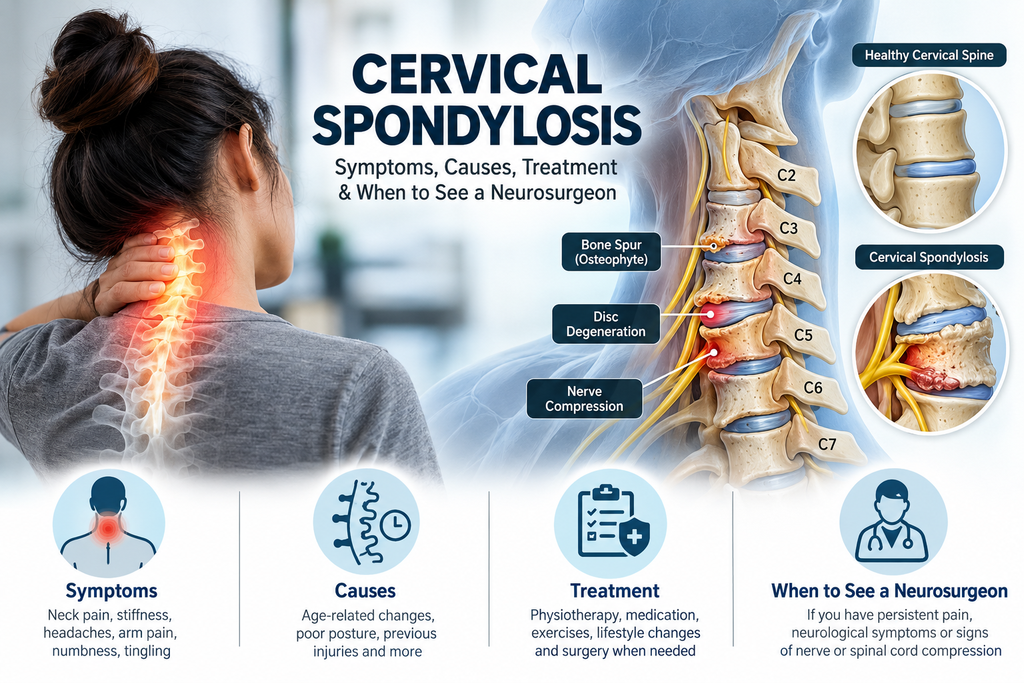
Cervical spondylosis is a common condition involving age-related changes in the bones, discs and joints of the neck. These changes may cause neck pain, stiffness, headaches and, in some cases, pain or numbness that travels into the shoulders, arms or hands.
Many people have cervical spine changes on an X-ray or MRI without experiencing significant symptoms. However, when these changes affect nearby nerves or the spinal cord, they may require further medical evaluation.
Understanding cervical spondylosis symptoms, causes and treatment options can help you make informed decisions about your spine health. In this guide, we explain how the condition develops, how doctors evaluate it, which treatments may help and when you should consult a neurosurgeon.
What Is Cervical Spondylosis?
Cervical spondylosis refers to degenerative changes in the cervical spine, the seven vertebrae that form the neck. The discs between these bones help absorb shock and allow the neck to move comfortably.
Over time, these discs may lose water content and become thinner. The joints and surrounding structures may also change, sometimes leading to bone spurs or narrowing of the spaces through which nerves travel.
These changes are often part of the natural ageing process. Their presence on imaging does not automatically mean that a person needs treatment or surgery.
What Changes Occur in the Cervical Spine?
Common changes associated with cervical spondylosis include:
- Disc degeneration: The discs may lose hydration and height, reducing their cushioning ability.
- Bone spurs: Small bony growths, called osteophytes, may develop around the vertebrae.
- Joint changes: The small joints of the spine may develop arthritis.
- Narrowing around nerves: Degenerative changes may reduce the space available for nerve roots or, in some cases, the spinal cord.
The significance of these changes depends on a person’s symptoms, physical examination and imaging findings.
Cervical Spondylosis vs Cervical Radiculopathy vs Cervical Myelopathy
These terms are related but describe different problems.
Cervical spondylosis refers to degenerative changes in the neck’s spinal structures.
Cervical radiculopathy occurs when a nerve root in the neck becomes irritated or compressed. Symptoms may include pain radiating into an arm, tingling, numbness or muscle weakness.
Cervical myelopathy occurs when the spinal cord is compressed in the neck. It may cause hand clumsiness, difficulty with fine movements, balance problems, walking difficulties or weakness.
Recognising these differences is important because spinal cord compression can require more urgent specialist assessment than uncomplicated neck stiffness.
Common Cervical Spondylosis Symptoms
Symptoms vary from person to person. Some people experience mild discomfort, while others develop symptoms related to nerve root or spinal cord compression.
1. Neck Pain and Stiffness
Neck pain and reduced flexibility are common symptoms. You may notice discomfort when turning your head, looking down for extended periods or maintaining one position for too long.
Symptoms may fluctuate, and not every episode of neck pain is caused by cervical spondylosis.
2. Shoulder Pain and Headaches
Discomfort may extend into the shoulders or the area around the shoulder blades. Some people experience headaches that begin around the back of the neck.
Headaches and shoulder pain can have several causes, so they should not automatically be attributed to cervical spondylosis.
3. Arm Pain, Numbness and Tingling
When a cervical nerve root is irritated or compressed, pain may travel from the neck into the shoulder, arm or fingers.
Other possible symptoms include:
- Tingling or pins-and-needles sensations
- Numbness in part of the arm or hand
- Weakness in certain arm or hand muscles
- Pain that becomes more noticeable with particular neck movements
These symptoms may suggest cervical radiculopathy and should be assessed if persistent, severe or worsening.
4. Hand Clumsiness and Balance Difficulties
Spinal cord compression can produce symptoms that differ from ordinary neck pain. These may include difficulty fastening buttons, handling small objects, writing or performing other fine hand movements.
Some people also experience leg stiffness, unsteady walking or difficulty maintaining balance. New or worsening symptoms of this kind require prompt medical evaluation.
What Causes Cervical Spondylosis?
The most common underlying factor is the gradual degeneration of the cervical spine over time. However, several factors can contribute to symptoms and spinal changes.
Age-Related Changes
As the spine ages, discs may lose hydration and height. The surrounding joints and ligaments can also change, and bone spurs may develop.
These changes are common with increasing age, but their severity does not always correspond to the level of pain a person experiences.
Posture and Work Habits
Prolonged desk work, frequent mobile phone use and maintaining the neck in one position for extended periods may contribute to muscular discomfort and aggravate existing symptoms.
Poor posture alone should not be assumed to be the cause of structural degeneration. Regular movement, ergonomic adjustments and appropriate exercise can help support neck function.
Previous Neck Injuries
Earlier injuries may affect the cervical spine and can contribute to later symptoms in some people.
Other Contributing Factors
Repetitive physical strain and individual health factors may influence spinal health. A clinician can help assess which factors are relevant to an individual case.
How Is Cervical Spondylosis Diagnosed?
A diagnosis is based on the patient’s history, symptoms and clinical examination. Imaging may be recommended when necessary.
Medical History and Physical Examination
A doctor may ask about the location and duration of pain, whether it travels into the arms, and whether there is numbness, weakness or difficulty walking.
The examination may include assessment of:
- Neck movement and discomfort
- Arm and hand strength
- Sensation
- Reflexes
- Coordination and walking balance, when indicated
The findings help the clinician determine whether symptoms may involve muscles, nerve roots or the spinal cord.
X-Rays, MRI and CT Scans
Different imaging tests provide different information.
- X-rays can show alignment and certain bony changes.
- MRI can help assess discs, nerve roots, the spinal cord and possible compression of these structures.
- CT scans may provide more detailed information about bones in selected cases.
An MRI is not automatically necessary for every person with neck pain. A clinician may recommend it when symptoms persist, neurological problems are suspected, warning signs are present or surgery is being considered.
Imaging results must be interpreted alongside symptoms and examination findings because degenerative changes can occur in people who have no pain.
Cervical Spondylosis Treatment Options
Cervical spondylosis treatment depends on symptom severity, examination findings, the structures affected and the person’s overall health. Many patients can be managed without surgery.
Non-Surgical Treatment
A clinician may recommend one or more of the following approaches.
Activity modification: Adjusting activities that aggravate symptoms may help. Prolonged bed rest is generally not a preferred approach for routine neck discomfort.
Physiotherapy: A physiotherapist can guide suitable exercises to improve neck mobility, posture, strength and function.
Medication: Depending on the patient’s medical history, a clinician may recommend medication for pain or inflammation. Not all medicines are suitable for everyone, so use them according to professional advice.
Heat or cold: Some people find a warm or cold pack helpful for temporary symptom relief. Protect the skin and avoid excessive temperatures.
Other treatments: In selected cases, a specialist may consider additional treatments, such as an injection, after assessing the likely cause of symptoms and the potential benefits and risks.
Treatment should be tailored to the individual. There is no single approach that works for every person with cervical spondylosis.
Cervical Spondylosis Exercises and Self-Care
Appropriate movement and exercise may help improve neck function, but the best programme depends on the symptoms and clinical findings.
A physiotherapist may recommend:
- Gentle neck mobility exercises
- Posture and shoulder-blade control exercises
- Suitable neck muscle strengthening
- Upper-back and shoulder strengthening
- Regular breaks from prolonged sitting
Avoid forceful neck movements, aggressive stretching or exercises that increase pain, numbness, tingling or weakness. Do not begin a neck exercise programme without professional guidance if you have significant neurological symptoms.
Everyday habits that may help:
- Position your screen near eye level.
- Keep your shoulders relaxed while working.
- Take regular movement breaks.
- Use a comfortable sleeping position that supports your neck.
- Avoid lifting heavy objects in ways that aggravate symptoms.
Exercises can support symptom management, but they do not reverse every structural change in the spine.
When May Surgery Be Considered?
Surgery is not required for every case of cervical spondylosis. It may be considered when a specialist identifies significant nerve or spinal cord compression, particularly if symptoms are progressive or function is affected.
Possible reasons for considering surgery include:
- Persistent, disabling nerve-related arm pain despite appropriate non-surgical treatment
- Progressive weakness or other neurological deficits
- Cervical myelopathy caused by spinal cord compression
- Imaging findings that match significant symptoms and examination findings
Depending on the underlying problem, procedures may involve removing pressure from nerves or the spinal cord. Some operations also involve stabilising the affected part of the spine.
The choice of procedure, expected benefits and potential risks must be discussed with the treating specialist. Surgery decisions should be based on an individual assessment, not on an imaging report alone.
When to See a Neurosurgeon for Neck Pain
Occasional neck discomfort may improve with appropriate conservative care. However, some symptoms need a more detailed assessment by a neurosurgeon or spine specialist.
Consider arranging a medical evaluation if you have:
- Persistent neck pain that is not improving
- Pain spreading into the arm or hand
- Ongoing numbness or tingling
- Weakness affecting the arm or hand
- Symptoms that interfere with daily activities
- Imaging findings that need to be interpreted alongside your symptoms
A specialist can assess whether the symptoms are related to cervical spondylosis, nerve root irritation, spinal cord compression or another condition.
Warning Signs That Need Urgent Medical Evaluation
Seek urgent medical care if you develop:
- New or worsening weakness in an arm or leg
- Difficulty walking, unsteadiness or repeated falls
- New hand clumsiness or loss of coordination
- New loss of bladder or bowel control, or difficulty passing urine associated with neurological symptoms
- Severe neck pain following a significant injury
These symptoms can have several causes and do not confirm cervical myelopathy on their own. However, they may indicate a serious neurological problem and should not be ignored. Do not wait for a routine appointment if symptoms are sudden or rapidly worsening.
Cervical Spondylosis Treatment in Hyderabad
Patients in Hyderabad experiencing persistent neck pain, arm symptoms or concerns about cervical spine degeneration may benefit from a clinical assessment by a qualified spine specialist.
At Dr. Ravi Kiran – Brain & Spine, patients can seek information about specialist evaluation and appropriate next steps for brain and spine concerns. The suitable approach depends on the individual’s symptoms, examination and relevant investigations.
A consultation may help clarify the possible cause of symptoms, whether further tests are needed and which treatment options are appropriate.
If you are considering an appointment, bring any previous X-rays, MRI or CT reports, a list of current medicines and a brief history of your symptoms.
Choosing the Best Neurosurgeon in Hyderabad for Spine Evaluation
If you are searching for the best neurosurgeon in Hyderabad for cervical spondylosis or other spine concerns, consider the doctor’s relevant qualifications, experience with your condition, available treatment options and the hospital facilities where care is provided.
A neurosurgical consultation can help assess persistent neck pain, arm numbness, muscle weakness or symptoms that may indicate nerve or spinal cord compression. Treatment recommendations depend on your symptoms, clinical examination and imaging findings. Many cases can be managed without surgery, while selected cases may need surgical evaluation.
Learn more about consulting a neurosurgeon in Hyderabad for brain and spine care.
Frequently Asked Questions
1. What Is Cervical Spondylosis?
Cervical spondylosis is age-related degeneration of the discs, bones and joints in the neck. It may cause neck pain and stiffness, and in some cases can affect nearby nerve roots or the spinal cord. Some people have these changes on imaging without experiencing symptoms.
2. What Are the Common Symptoms of Cervical Spondylosis?
Common symptoms include neck pain, stiffness, shoulder discomfort and sometimes headaches. If a nerve root is affected, pain, tingling, numbness or weakness may travel into the arm or hand. Spinal cord compression may cause hand clumsiness, balance difficulties or walking problems.
3. Can Cervical Spondylosis Be Treated Without Surgery?
Yes. Many people are managed with non-surgical approaches such as activity modification, physiotherapy and clinician-recommended medication. Surgery may be considered when significant nerve or spinal cord compression causes persistent or progressive problems.
4. What Exercises Help With Cervical Spondylosis?
Depending on the person’s condition, a physiotherapist may recommend gentle mobility exercises, posture training and strengthening exercises for the neck and upper back. Exercises should be selected according to symptoms and performed safely. Stop an exercise that worsens neurological symptoms and seek professional advice.
5. Is Cervical Spondylosis Serious?
It can range from mild age-related changes to a condition involving nerve or spinal cord compression. The seriousness depends on symptoms and clinical findings, not just an X-ray or MRI report. Progressive weakness, walking difficulties or new bladder or bowel symptoms need urgent assessment.
6. Does Everyone With Cervical Spondylosis Need an MRI?
No. Imaging decisions depend on symptoms, examination findings and warning signs. MRI may be recommended when persistent nerve-related symptoms, suspected spinal cord compression or other concerning features require further investigation.
7. When Is Surgery Needed for Cervical Spondylosis?
Surgery may be considered for selected patients with significant nerve or spinal cord compression, progressive neurological deficits or persistent disabling symptoms despite suitable non-surgical care. A specialist evaluates the symptoms, examination and imaging before discussing the benefits and risks.
8. Can Cervical Spondylosis Cause Arm Pain and Numbness?
Yes. If degenerative changes irritate or compress a cervical nerve root, symptoms can spread from the neck into the shoulder, arm or fingers. Persistent numbness, weakness or worsening pain should be assessed by a healthcare professional.
9. When Should I See a Neurosurgeon for Neck Pain?
Consider a specialist assessment if neck pain persists, radiates into an arm, or is accompanied by ongoing numbness or weakness. New or worsening weakness, difficulty walking, loss of coordination or bladder and bowel changes require urgent medical evaluation.
10. Can Cervical Spondylosis Be Prevented?
Age-related spinal changes cannot always be prevented. However, regular physical activity, appropriate posture, avoiding prolonged static positions and maintaining general health may help support neck function and reduce some aggravating factors.
Conclusion
Cervical spondylosis involves changes in the neck’s spinal structures that may or may not cause symptoms. While many people improve with appropriate non-surgical management, symptoms related to nerve root or spinal cord compression need careful evaluation.
Understanding your symptoms, following suitable treatment advice and recognising warning signs can help you make informed decisions about your spine health.
If you have persistent neck pain, arm numbness or weakness, or concerns about cervical spine degeneration, consider seeking an appropriate medical assessment. A qualified specialist can help determine the cause of your symptoms and discuss suitable treatment options.
Medical disclaimer: This article is for general educational purposes only. It does not replace professional medical advice, diagnosis or treatment. Seek urgent medical care for new or rapidly worsening neurological symptoms.